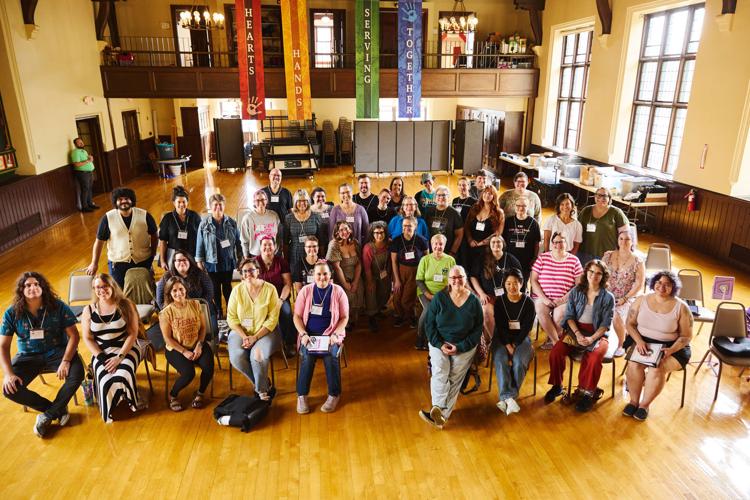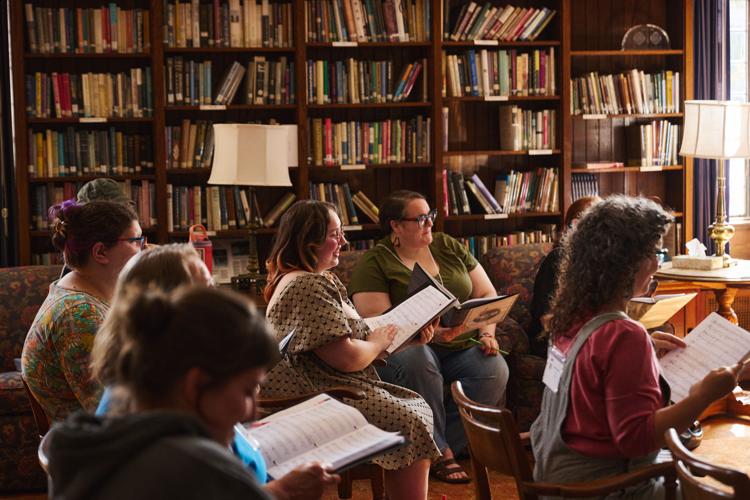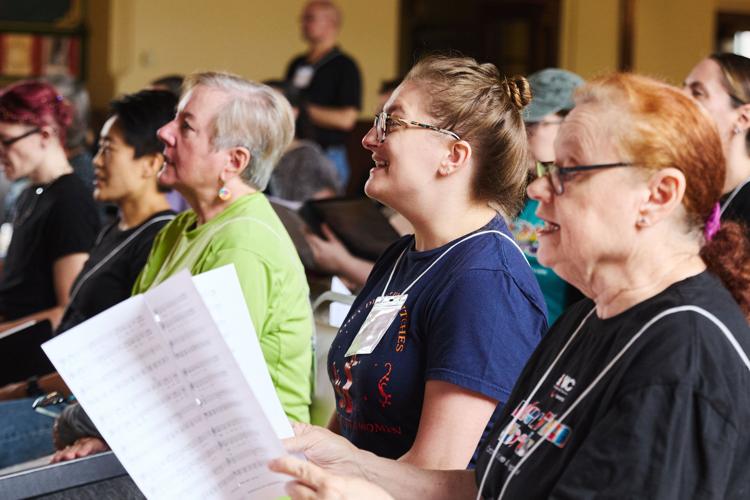
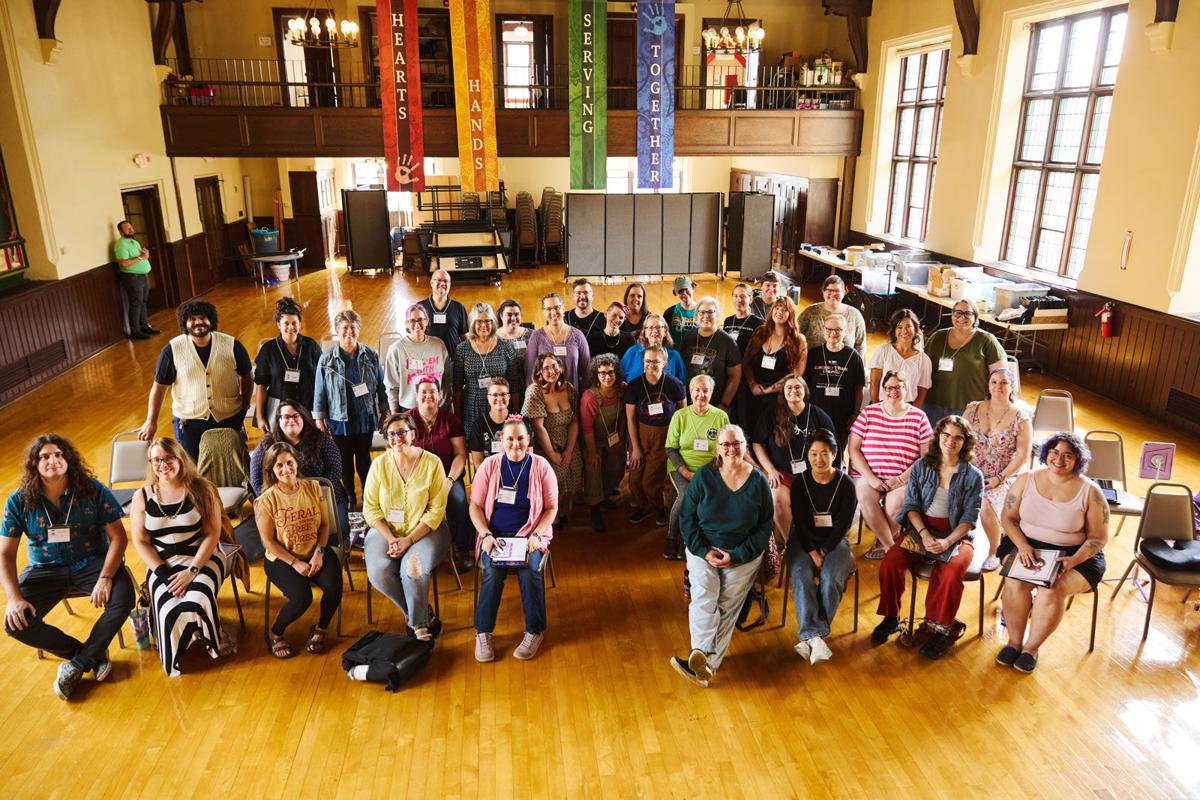
Established in 2025, the Nickel City Treble Makers are about to embark on their second holiday concert season. The group is an expansion of the Buffalo Gay Men’s Chorus (BGMC), a group that prides itself on giving voice to the marginalized; so, adding even more voices seems right on brand.
The Treble Makers bring together sopranos, mezzo-sopranos and altos of all gender expressions to complement the deeper tones of the BGMC.

There was the usual uncertainty when the group started. Would there be enough people interested in participating? Would the community be interested in them?
“The Treble Makers started with three pieces in the May 2025 concert to see if Buffalo wanted it,” says Dr. Robert Strauss, artistic director for both groups. “They did.”
People are also reading…
The Treble Makers have since completed their first full season with a growing chorus, new members finding their voices and a contagious enthusiasm.
“BGMC has existed for 24 years as the ‘only child’ so [the group] could have acted spoiled about it, but they love the energy,” Rob says. “The groups are really supportive of each other. There are new people willing to volunteer and get excited about things.”
Those things include a full slate of concerts throughout the year, peaking during the holidays with multiple shows around the region.

The Treble Makers perform both separately and alongside the BGMC, which was established in 1999. Rob says the addition of the Treble Makers has expanded the groups’ repertoire while creating opportunities for more people to become part of the community and experience the joy of singing together.
“We look fairly feminine as a group, but everyone identifies differently and is respectful of where people are in their life,” says Treble Makers member Mary Moglia-Cannon.
“Straight people sing with us too,” Rob adds. “You don’t have to be anything—you just have to match pitch and support the mission.”

Matching pitch is what enabled Mary, who does not read music, to join the group.
“I was a little intimidated at first—there are many classically trained and accomplished musicians,” she says. “But everyone made me feel so comfortable.”
She joined because she loves to sing, but also because she believes in the mission. She had attended several BGMC concerts and was inspired both by the musicianship and the message.
“I was in tears for most of the first concert,” Mary says. “This group was really trying to reach out to all—queer people, trans kids. The message was really one of inclusion.”
The group just held its annual coming-out concert in October, an event that builds community while celebrating authentic identity.
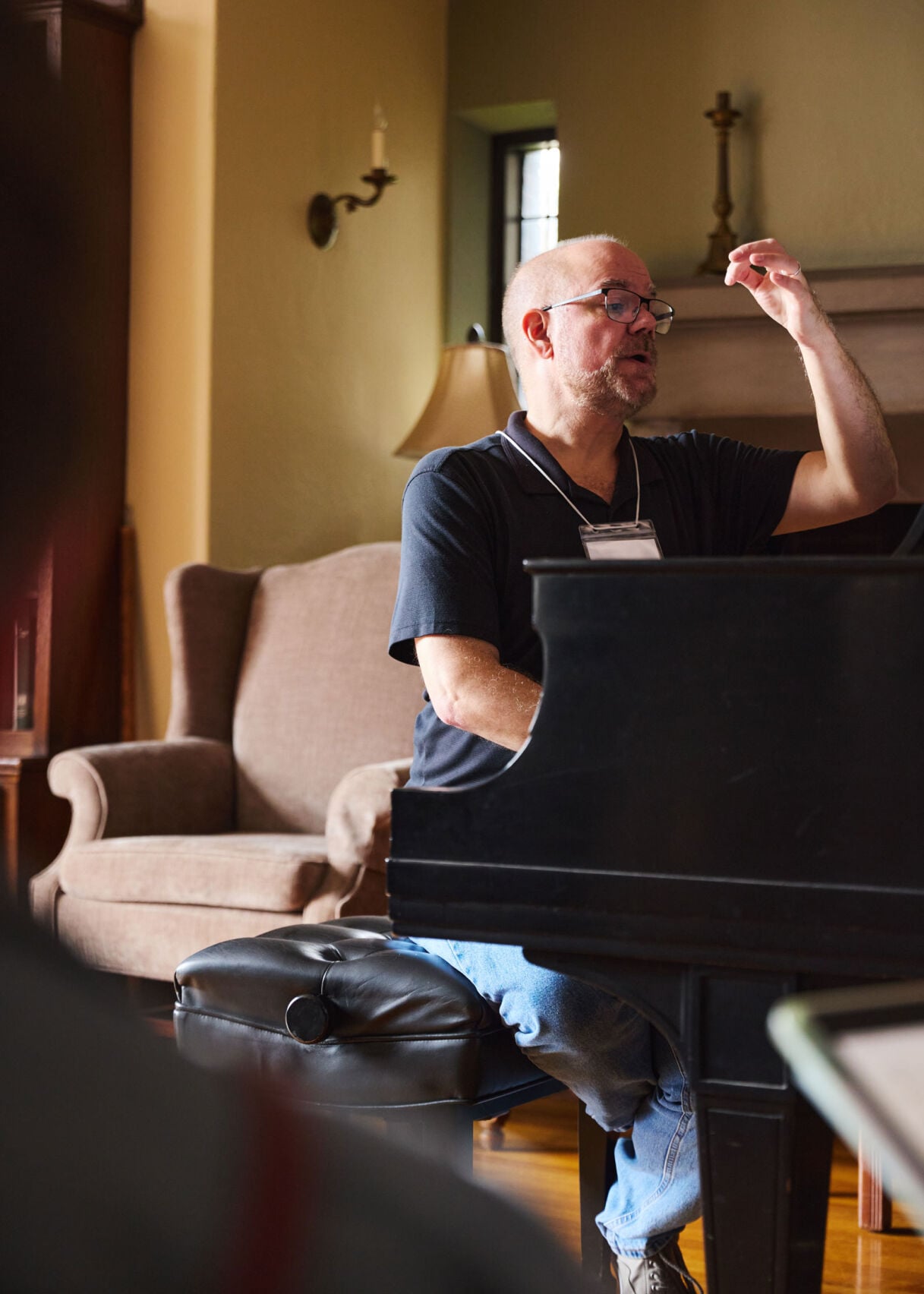
For Rob, the concert represents a kind of full-circle moment. A Kenmore East graduate, he remembers a time when LGBTQ+ inclusion in school performances would have been difficult to imagine.
“In my first year [as artistic director] at the coming-out concert, one of the groups from Kenmore East came to sing,” Rob says. “When I was in high school, that would not have been allowed. Sometimes it feels like we haven’t gone forward at all, but here are these high school groups participating without a lot of red tape.”
There are still obstacles. In June 2024, a Buffalo Catholic church canceled a Greater Buffalo Friends of Music concert because there were groups involved that had values “inconsistent with Catholic teaching,”—namely, the BGMC.
But there was a silver lining. “Within hours, Holy Trinity Lutheran Church said they would host, which was beautiful,” Rob says.
Other churches, including St. Joseph’s University Parish in Buffalo, also regularly welcome the chorus.
As for the music itself, Rob said neither group is bound to a single genre. Their repertoire includes gospel, pop, musical theater and more. Sometimes the music is about reclaiming religious songs members enjoyed when they were younger but that later felt disenfranchising.
Last season, the Treble Makers put their own spin on “Hail Holy Queen” from the 1992 comedy “Sister Act.”
“We’re incorporating who we are as queer people and having fun with it,” Rob says.
For Mary, singing with the chorus is also a way to live more authentically.
“I am bisexual, and I grew up being very confused about my sexuality, at a time when holding hands with a woman wasn’t something I could do in public,” she says. “I’ve always felt that living your values is a critical part of being fulfilled and happy.”
But her connection to the chorus goes beyond her own experience.
“There is joy and empowerment,” Mary says. “The idea is to share and spread queer joy and acceptance—and have more people feel comfortable about that.”
To see concert schedules for both groups, visit thebgmc.org.