Walking into one of the many town and village history museums found in Erie County is a bit like entering a living, breathing time capsule filled with artifacts, photos, books and assorted ephemera.
To the dedicated individuals involved with these local historical societies and museums, however, preserving and sharing the area’s past is about more than simply admiring items from bygone days. It is about educating for tomorrow.
“You cannot succeed in the present and future without studying the past,” says Aurora Town Historian and East Aurora Village Historian Robert Lowell Goller. “We help residents research their past in order to appreciate and learn from the efforts of the community’s previous residents, and to better prepare ourselves for the future.”

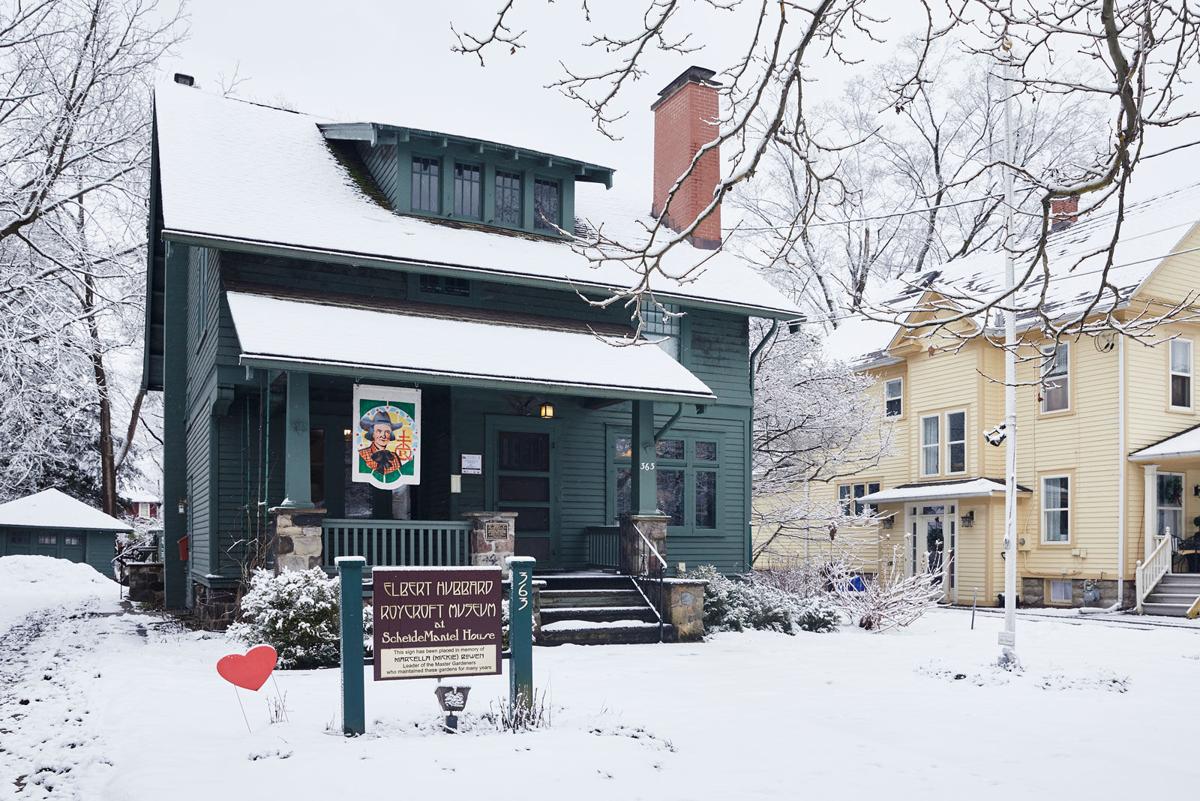
The Elbert Hubbard Roycroft Museum contains one of the rarest collections of Roycroft artifacts, including photos of Hubbard, bound and illuminated books, furniture and copper work, and oil paintings by Roycroft artists such as Sandor Landeau and Alexis J. Fournier.
Christopher Gust, vice president of the Alden Historical Society, agrees that understanding what life was like for those who lived in Western New York before us is tremendously important.
People are also reading…
“What challenges did they face and how did they deal with them?” he says. “How did they connect and develop a sense of community? How have the circumstances of daily living changed over the years? Knowing local history gives one a connection to place and to people.”
Sometimes that connection is physical; many town and village museums are located in old homes and buildings or recreations of actual locations. Consider these highlights:
- Millard Fillmore Presidential Site and Elbert Hubbard Roycroft Museum, both maintained by the Aurora Historical Society, are the former homes of Fillmore’s family and a Roycroft-era couple.
- The Concord Historical Society is located in an authentic, late-1800s country store complete with merchandise, plus a recreation of Springville's brick-paved Main Street with walk-in shops and interactive kiosks.
- West Seneca Historical Society & Museum is housed in an original home constructed circa 1850 by the Ebenezer Society, along with a circa 1900 “street of shops.”

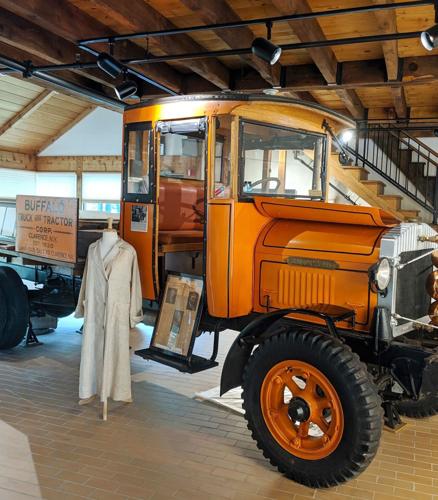
This truck, which is on exhibit at the Clarence History Museum, was built in 1923 at the Buffalo Truck and Tractor Company, which was located in Clarence.
Beyond these physical locations, other highlights include:
- One of the largest collections of lithium batteries and early early pacemakers invented by late Clarence resident Wilson Greatbatch at the Historical Society of the Town of Clarence.
- Fossils of sea creatures found in Alden creeks, including a rare enrolled trilobite, at the Alden Historical Society.
- A space dedicated to legendary youth football founder and Springville native Pop Warner at one of the five Concord Historical Society buildings.
There are practical reasons for visiting town and village museums; many feature town records and genealogical materials. For young visitors, though, it's all about seeing artifacts and gaining a sense of life long ago. A number of museums offer interactive elements for children, including school groups and home-schoolers. Some, including West Seneca, have implemented QR codes with their exhibits.
At the Concord Historical Society's Lucy Bensley Center, Village of Springville Historian and Department Historian for the Town of Concord Jolene Hawkins says there are tables where "kids can spread out and look at all that is in our archives. And sometimes I churn butter here when I know folks are coming." (Hawkins is "Grandma Butter" at the Erie County Fair, making and handing out 26 samples.)

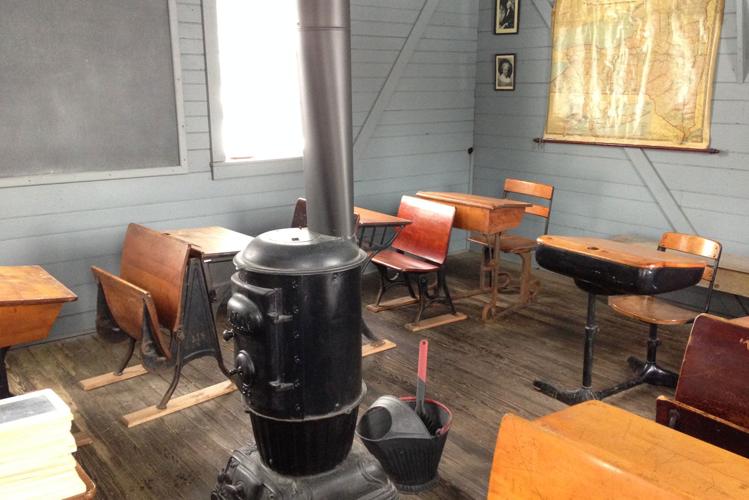
A look inside the circa 1850 Henskee Road schoolhouse, located at Alden Town Park and opened by the Alden Historical Society for special community events.
Alden Town & Village Historian Karen Muchow says the Alden Historical Society’s heritage center features a toy collection that includes many “try-its”—dial phones, manual typewriters, View-Masters and xylophones, to name a few. Gust says programs also include a simulated one-room schoolhouse experience.
And in West Seneca, Town Historian Jim Pace says the museum’s frequent fourth grade tours are so popular that “children often return with their parents and adult family members.”
Offering these unique programs, keeping exhibits fresh, and protecting and preserving artifacts and materials is a time-intensive job that often involve volunteers. For example, while government entities maintain museum buildings in many communities, the volunteer-based Aurora Historical Society owns and maintains both the Millard Fillmore and Elbert Hubbard Roycroft museums in East Aurora.
Reading about such items online or seeing website photos can be engaging, but it is the physical artifacts that make these museums so special. The rewards of viewing them in person are significant.
“With so many new people moving to our towns and villages, a sense of history needs to be accessible,” says Clarence Town Historian Joe McGreevy. “We all have a passion for history and the mindset to think outside the box to keep finding new ways to connect to the community.”

Looking to visit a history museum in your town or village? Or looking to connect with a loca…