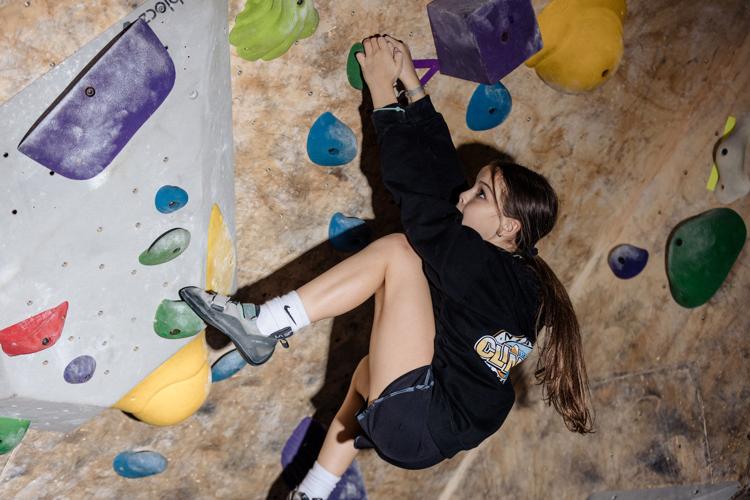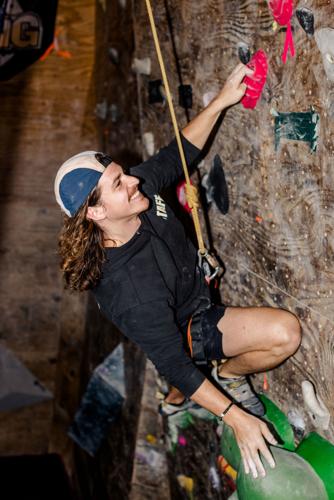
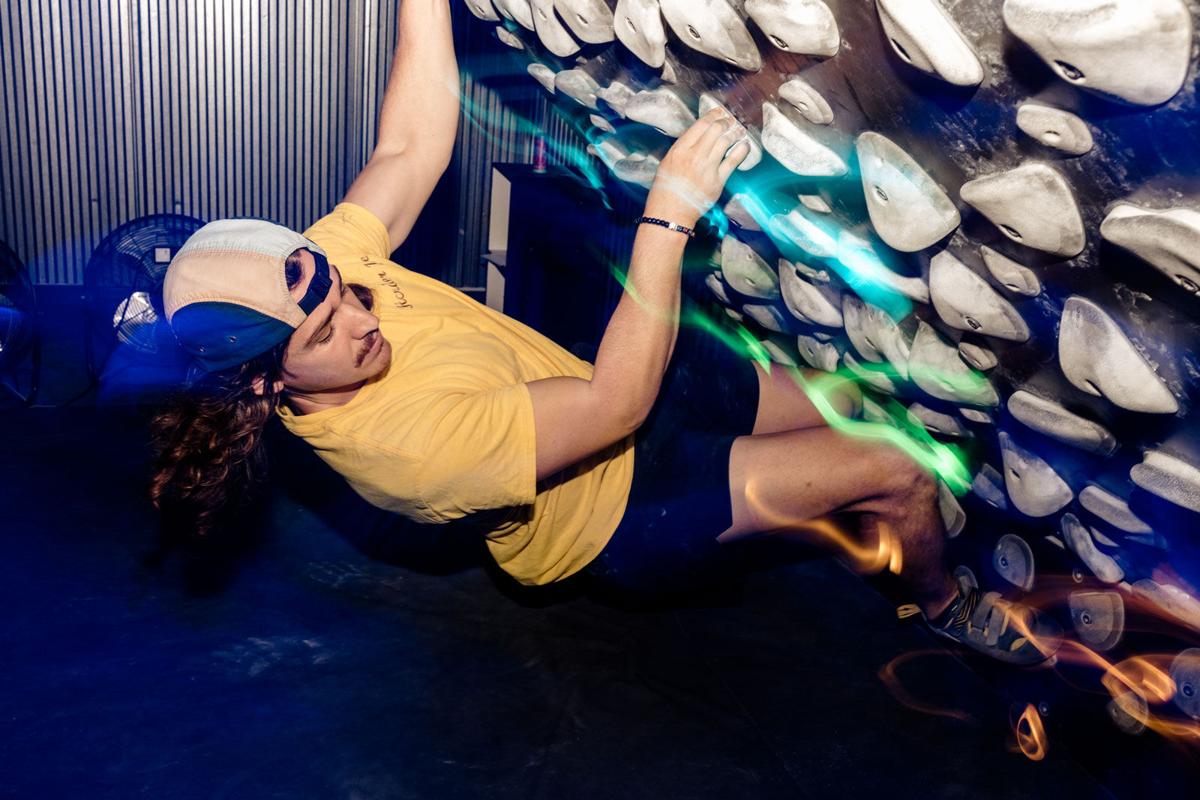
From an outsider’s perspective with two feet planted firmly on the ground, indoor rock climbing might seem kind of weird and a little daunting. People in little pointy shoes reaching and pulling to scale a wall pocked with colored bumps no bigger than a burger bun. Grown men walking around in harnesses like strappy underwear hung with carabiners and bags of white chalk. Folks tethered to ropes stories above ground level.
Why would anyone want to do that?
The short answer: for the physical strength, mental clarity and community that are unique to this growing sport.
The quick draws of climbing
Like most climbers, Jared Rochez, a head instructor at Buffalo’s Central Rock Gym (CRG), loves climbing for the workout, but also for the mental challenge.
“Climbing is physical, for sure, but there’s a big mental component,” he explains. “You look at the route ahead of time, figure out a possible way to do it, then give it a try. It requires you to be focused and present in the moment; you can’t really be thinking of anything else.”
People are also reading…
For Ethan Farkas, who grew up climbing and is now the director of operations at Niagara Climbing Center (NCC) in North Tonawanda, the social and community aspects of the sport are what keep him so engaged.
“I find that everyone who is part of the climbing community has a great personality,” he says. “You can show up to the gym by yourself and see someone you know or meet someone new. We’re a smaller, older gym, so it’s a close-knit community that feels like a second home to members and provides a comfortable atmosphere for new people.”
Brianna Nilsen dabbled in climbing through elementary school birthday parties, tagging along with a friend in high school and a few visits to a local Rochester gym while in college. When she first met her husband, Austin, who was a climber, they went on bouldering dates together. Now she cherishes her time at the gym so much that she continued to climb through her pregnancy and is still a regular as a new mom.
“I love how climbing makes me feel mentally and physically,” she says. “I love the community. I also love that CRG changes the routes; there’s always something new. You’re never going to get bored because you’ve done all the things.”
Choose your own adventure

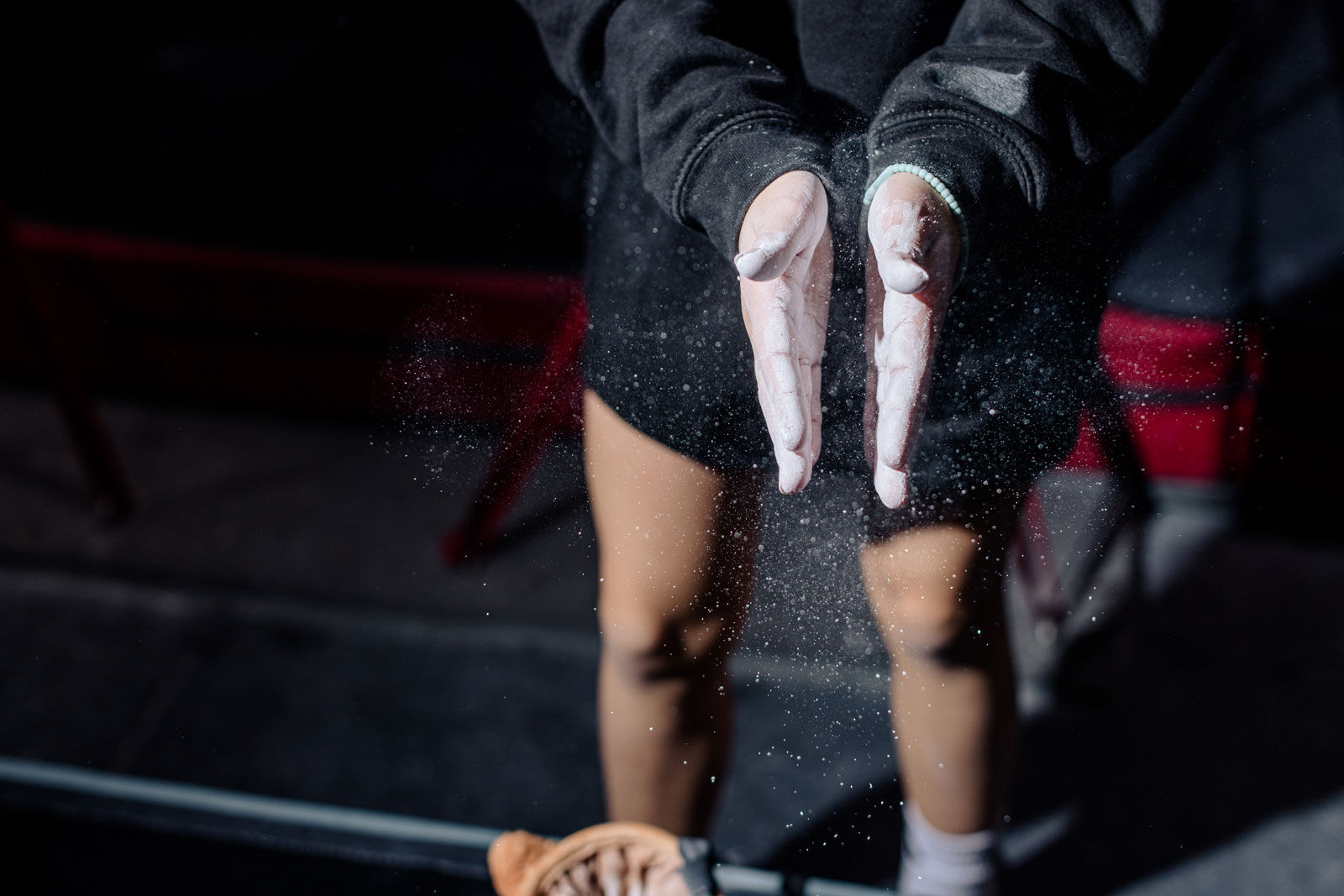
Chalked hands on display—the better to grip with— a climber tackles a route at Niagara Climbing Center.
There are two kinds of indoor climbing for beginners: bouldering and top roping. The premise of both is to climb the wall using only a designated series of protruding, colorful climbing holds. Bouldering is done without harnesses and ropes on shorter walls, and the sequences of holds are called “problems,” which are labeled by difficulty from V0 (easy) up to and sometimes exceeding V12 (hard).
The second kind, top roping, involves a rope, a harness and a partner. The rope is looped over an anchor at the ceiling with one end attached to the climber on the wall and the other attached to a partner standing on the ground (called the “belayer”), who pulls the rope taut to support the climber as she advances up the wall. Climbing sequences are called “routes” and graded by difficulty from 5.3 (easy) up to 5.13 and above (hard). Some climbers just boulder, some just rope climb and many do both.
Climbing gym staff regularly re-set all the holds so there are always new routes and problems to figure out.
First ascents
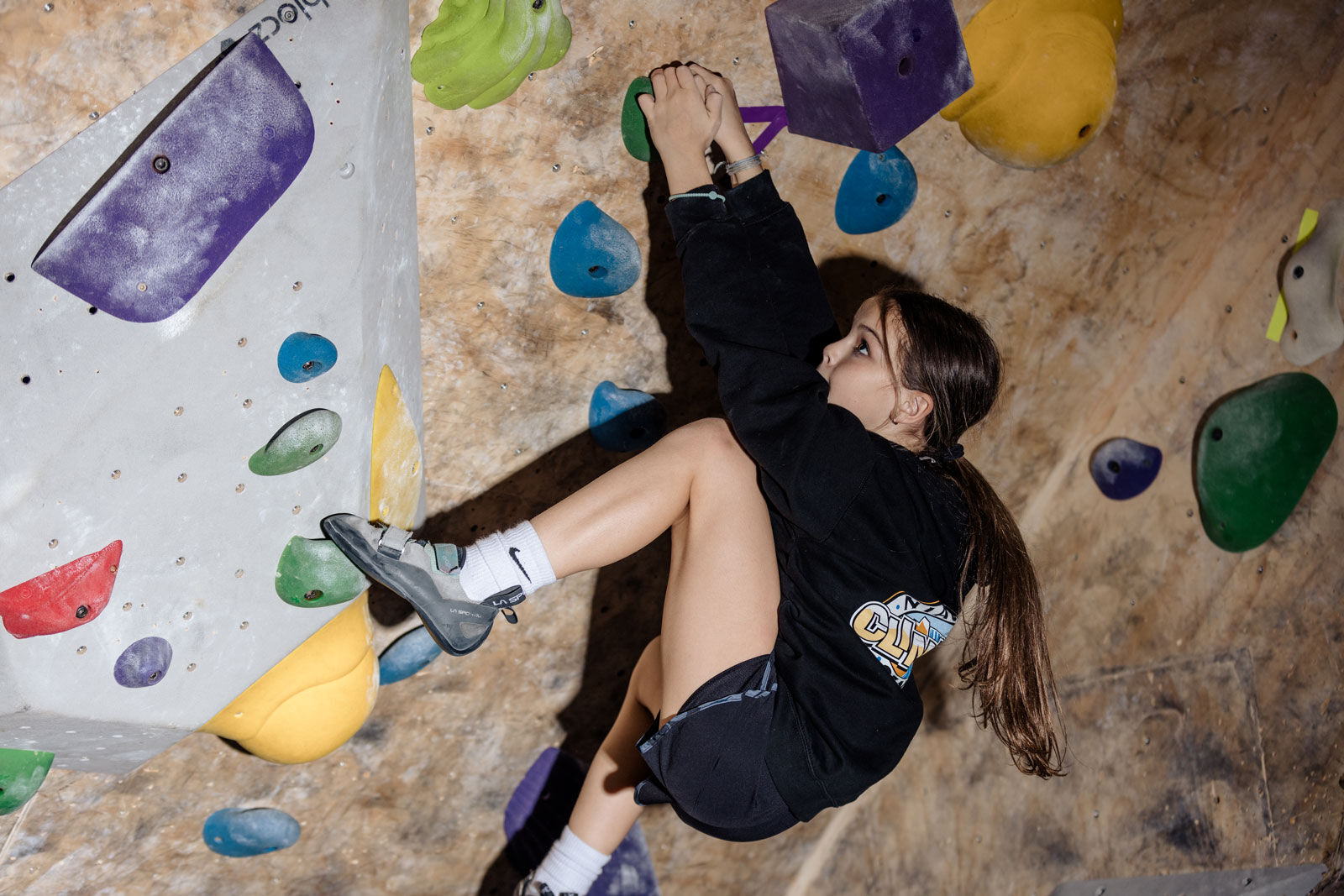
Climbing has options for all ages, from kids through older adulthood.
On your initial visit to the climbing gym, you’ll purchase a day pass and sign a waiver. Then gym staff will give you a tour of the facility, get you fitted for climbing shoe rentals if needed and show you the basics of bouldering. To learn how to climb on the walls with ropes, you’ll rent a harness and learn how to belay and climb with a partner. Both local gyms offer belay lessons that climbers can register for in advance and cover the basics of belaying safely. Once a climber is certified to belay, they can partner up with friends or strangers to climb any roped route in the gym.
Both gyms offer adult climbing progression classes that teach foundational climbing skills and then continue to add techniques, tips and individual feedback to improve climbing skills. They’re designed to steadily build confidence and technique to tackle new and different routes, and to ease new climber fears.
“Everyone starts with a fear of falling,” explains Jared, the CRG instructor. “Most people, thankfully, don’t have any experience falling off something. But it’s intuitive—your body knows how to do the right thing, and we work on being comfortable by climbing partway up the wall and falling on purpose so you can get used to what the rope catch feels like.”
Watching experienced climbers scale a wall with ease that defies gravity can seem impossible to someone who’s not even sure how to put on a harness. That’s how Lily Engebrecht felt when she first started a couple years ago, but she soon learned just how accessible climbing really is.
“When I initially started climbing, I felt very intimidated by how difficult it seemed,” she says. “Now climbing is something I know that I will continue for the rest of my life. As a woman, it has been amazing to find a sport that has made me feel stronger than I have ever felt in my life. It is also something that encourages you to stop comparing yourself to others, as you are just competing against yourself and not anyone else.”
Wall to wall: Where to climb in WNY
Western New York is home to two indoor rock-climbing gyms. Both have their own distinctive, welcoming vibes and offer a variety of lessons, climbing clubs and meetups, yoga and fitness classes, summer and school break camps, and special events from climbing competitions to costume parties.
Central Rock Gym in the Old First Ward, just south of downtown, opened in 2019 as the Western New York outpost of a climbing gym chain with locations around the northeast. The cavernous facility features a variety of roped climbing walls as tall as 45 feet, a central bouldering area, a kids’ section, a yoga studio and a fitness studio. Hours vary each day starting at 6 a.m.
Niagara Climbing Center in North Tonawanda opened its doors in 1998 and is rumored to be one of the oldest climbing gyms in North America. It’s a smaller, more intimate facility built in the gymnasium of a former school that focuses mostly on bouldering, though there are belay stations on shorter 20-foot walls that are ideal for youth climbers. It’s open evenings and weekends.