Pine warbler. Chickadee. Common merganser. Sandpiper.
These bird names are fun to say, but for local birders, they’re even more exciting to catch sight of in the wild.
Birding, the more active, updated term for “birdwatching,” is a pastime that’s grown in popularity in recent years—and not just among retirees. Birding took flight during the Covid-19 pandemic when people flocked with gusto to easily distanced outdoor activities. But once new birders got into the habit of scanning every thicket, pond and treetop for the hint of fluttering feathers, they were hooked.
And with good reason.
An ecological haven

An Eastern bluebird at Knox Farm State Park.
It turns out that Western New York is an internationally known hotspot for birding due to its abundance of open water and location on the globe.
The Niagara River Corridor was recognized in 1996 as the first globally significant Important Bird Area for its abundance of habitat and resources, a distinction shared by the Galapagos, Florida Everglades and Yellowstone National Park. In 2019, the Niagara River and its wetlands received worldwide recognition with a Ramsar Site designation, placing it at the same level of ecological importance as places like Chesapeake Bay on the mid-Atlantic coast and the Okefenokee Swamp in Georgia.
The region is also in the path of the Atlantic Flyway, an arial highway birds use to migrate thousands of miles from the Arctic south in the fall and from South America north in the spring. Ed Siriano, executive director of the Buffalo Audubon Society, says data suggests that as many as 20 million birds fly over the City of Buffalo in one single night during migratory seasons.
All that traffic means a wealth of bird varieties stopping in Western New York to rest and eat, joining the plethora of resident birds who live here all year round. The Buffalo Ornithological Society has recorded more than 380 species of birds in the region.
A hobby for all

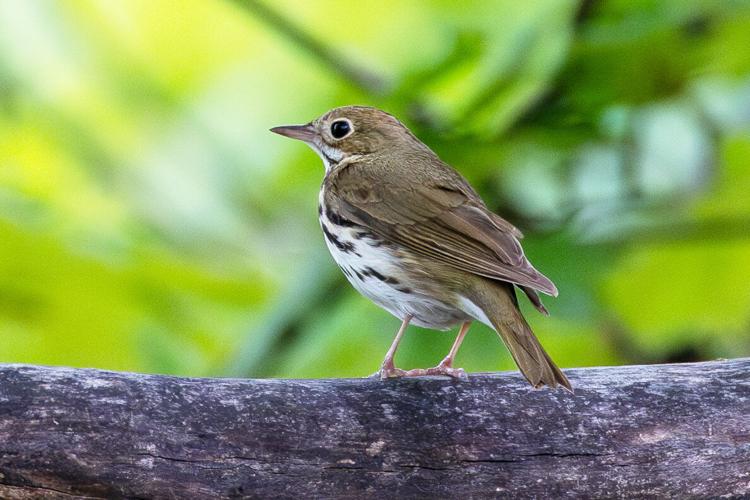
Hermit thrush in WNY backyard.
For avid birder Ruth Goldman, a college professor and filmmaker, birding has become an almost daily activity she combines with her love of photography.
It started in 2018 when she saw photos of beautiful birds on Facebook and had to find out what they were (answer: warblers, adorned in their springtime plumage, hanging out at Forest Lawn Cemetery). Now an avid four-season birder, she uses her camera to photograph birds to identify later through apps and guidebooks, her way of learning their names. She also shares photos on social media with friends, sparking them to pick up the pastime the same way she did.
“My philosophy now is that it’s great if I see something rare and exciting, but I embrace everything I see and find joy in any birds,” she explains. “I post the photos with the intention of showing them in their environment with a little info to show who the bird is—maybe they’re a forager or doing a courting ritual.”
Camaraderie and presence

Red-headed woodpecker at Tifft Nature Preserve.
People are drawn to birding for lots of reasons. Some enjoy the thrill of spotting an uncommon bird they’ve never seen. Others, such as Kellie Mazur, like the safety and companionship of birding with like-minded people she enjoys hanging out with; she and Goldman are both members of the Feminist Bird Club of Buffalo for those reasons. For most, birding is a great way to enjoy fresh air and soak in nature’s calm surroundings.
“The thing I love about birding is that it’s very meditative,” explains Ruth. “I’m an academic, have an overactive brain, and there are always so many things to worry about. But when I’m watching birds, everything stops. You have to focus completely on that.”
For Kellie, whose birding hobby started when she noticed chickadees at her birdfeeder and grew curious about what other kinds of birds might visit her yard, the pastime reminds her to be in the present moment.
“There are birds around us constantly,” she says. “For me, birding is about noticing. Even in a parking lot, you might see a ring-billed gull or a crew. You can notice how it looks, how they sound, how they behave. There are layers of things to take in, and it’s always all around us.”
Getting started

Sandhill cranes at the Iroquois National Wildlife Refuge.
Hopping onto the birding bandwagon is as easy as seeing what kinds of birds visit your own back yard or balcony and setting out feeders to attract others. Shops like Wild Birds Unlimited in Blasdell, which is owned and run by experienced birders, can offer guidance on selecting the right feeders and seed to attract specific species or to welcome an array of birds.
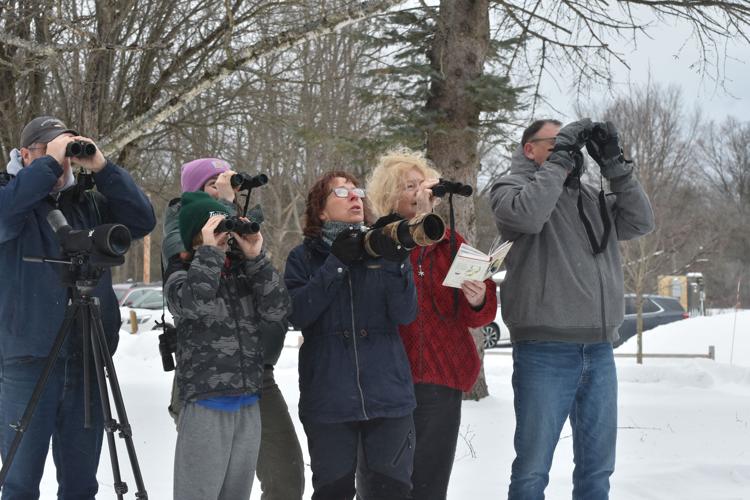
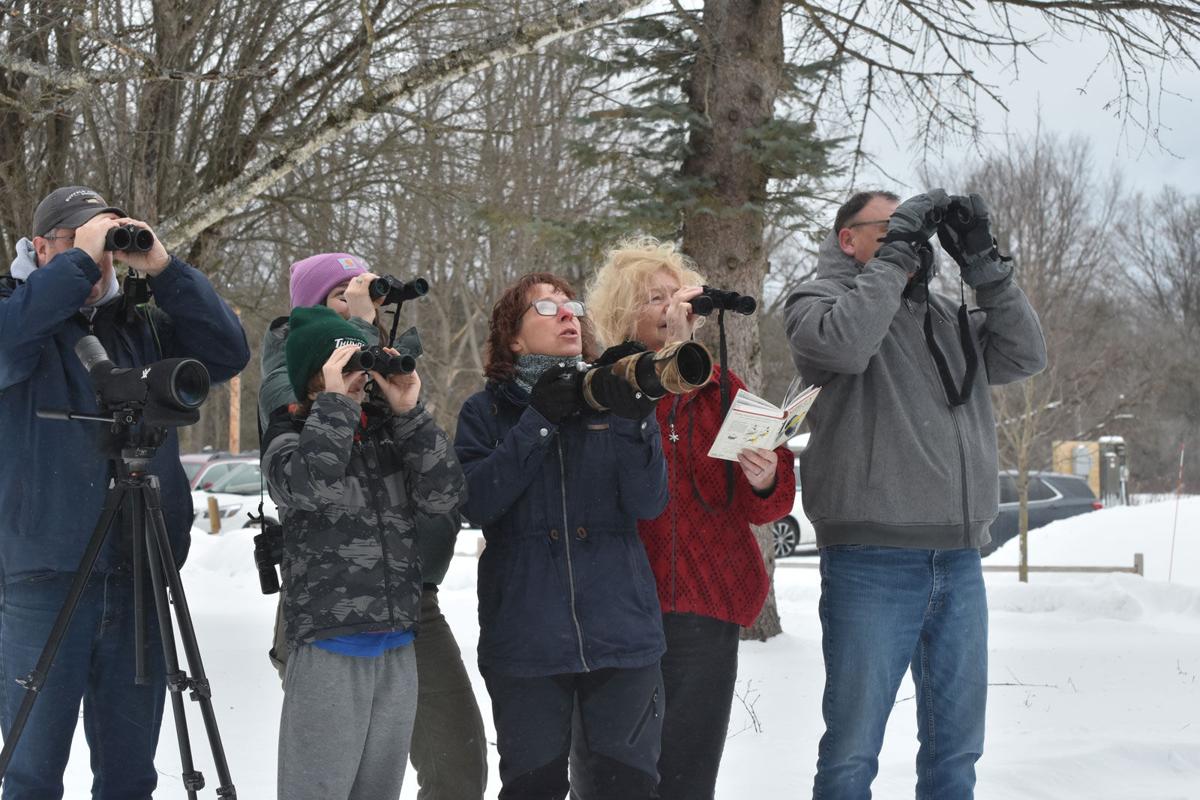
To begin birding out in the wild, Goldman recommends finding birding events, guided walks or birding groups, where avian afficionados can help identify birds and what to look for.
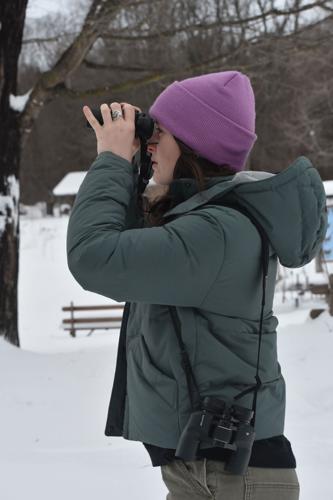
Many gatherings, like weekly walks with the Buffalo Audubon Society at its Beaver Meadow Nature Center, supply visitors with binoculars to borrow. Mazur says that having your own set is nice, but not necessary; so many species are visible to the naked eye that it’s worth seeing if you enjoy the hobby before investing in the gear. The Buffalo Audubon Society also offers birding camps for kids, events for beginners and experts and is adding ADA-accessible trails this summer to welcome birders of all abilities.
If you’d rather wing it on your own, apps like Merlin Bird ID and Audubon Bird Guide can identify birds specific to the WNY region by photos or by song. Guidebooks and identification cards published by Sibley include details like habitat and behaviors that help birders increase the odds of seeing them.
The Buffalo Audubon Society also offers seasonal birding challenges in collaboration with the Outside Chronicles, organizers of the popular WNY Hiking Challenge, with birding tasks that participants complete and record in an app for motivation and friendly competition.
As the weather warms and the region’s human inhabitants wander into sunlit natural spaces, keep an eye out for the chirps and flutters of some new feathered friends.
Birding for science
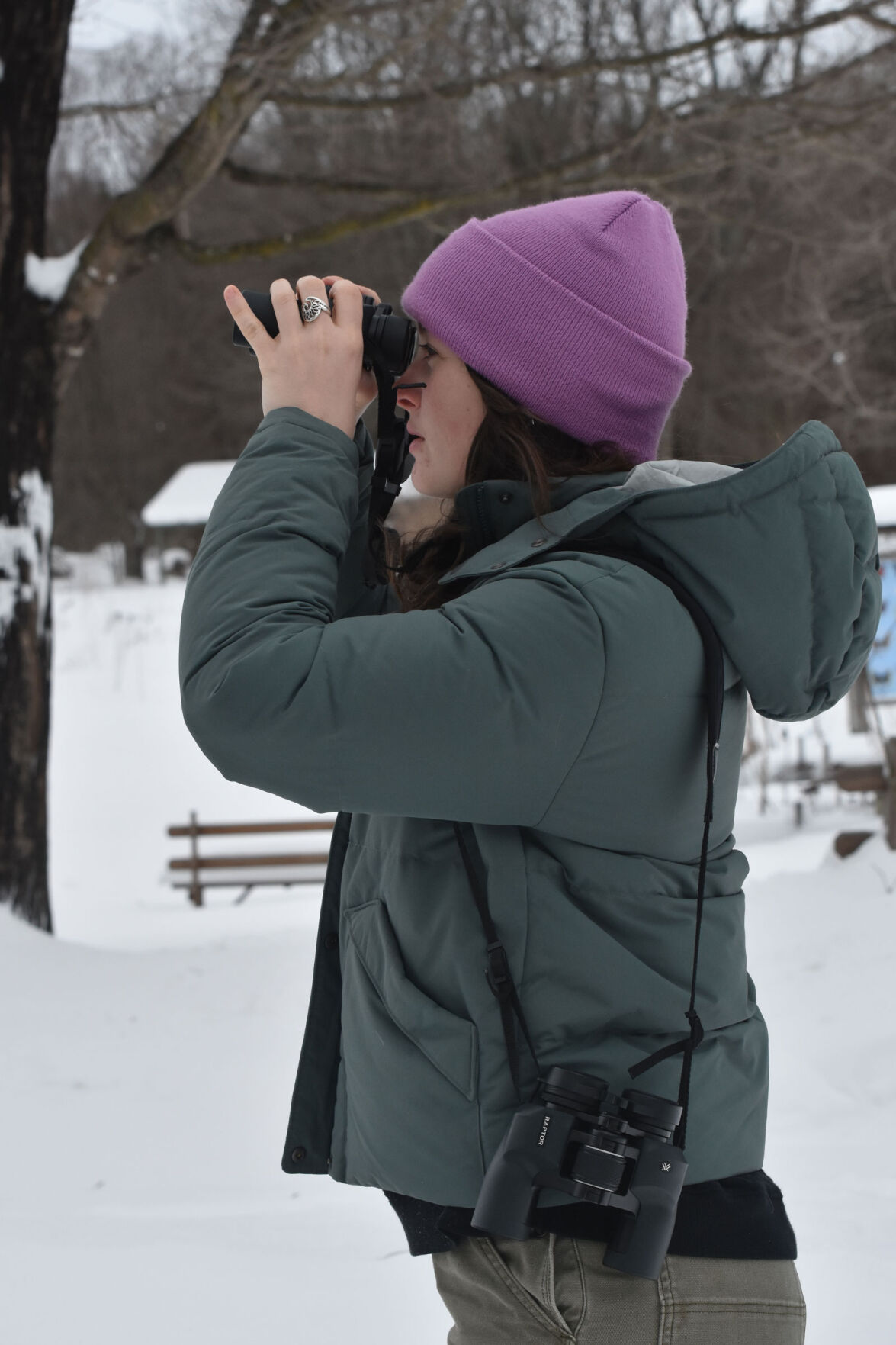
Birding can be done purely for pleasure—but also for science. Since 1929, the Buffalo Ornithological Society (BOS) has hosted bird-counting efforts several times each year that send members out to designated areas to conduct a census of birds spotted in that location. Data gathered by these citizen scientists is compiled by BOS statisticians and shared with research partners, including the New York State Department of Environmental Conservation, to study and monitor bird population health in the region.
“The BOS was one of the first birding societies in the U.S. to develop a system of validating our members’ field records to go into our database,” says David Suggs, a BOS past president and lifelong birder. He says that in the time the BOS has been conducting these counts, birding has changed significantly.
“Ornithology has evolved,” he says. “A century ago, it was specimens in hand that were used to identify birds. The optics—binoculars, camera lenses—didn’t exist. Conservation and advances in optical technologies have changed how we view and identify birds.”
WNY Birders' best spots
1. Amherst State Park
2. Beaver Island
3. Beaver Meadow Nature Center
4. Buckhorn State Forest
5. Buffalo & Erie County Botanical Gardens
6. Buffalo’s Outer Harbor
7. Forest Lawn Cemetery
8. Iroquois National Wildlife Refuge
9. Lewiston Landing
10. Losson Park
11. Niagara Falls State Park
12. Old Fort Niagara
13. Reinstein Woods
14. Tifft Nature Preserve