Sure, the kitchen sink is a place to wash your dishes and prep your meals. But it also serves as a design focal point that should harmonize with your appliances, countertops and cabinets.
Whether you’re building a new kitchen or remodeling an old one, think about the look you’re going for —sleek or homey, contemporary or nostalgic — and choose a sink to match.
The 2018 National Kitchen and Bath Association (NKBA) Design Trends Study surveyed 822 designers, remodelers, architects, dealers and manufacturers on the cutting edge of kitchen designs. They found that sleek, contemporary styling, rustic farmhouse flavor and the clean lines and delicate curves of the transitional kitchen are trending now.
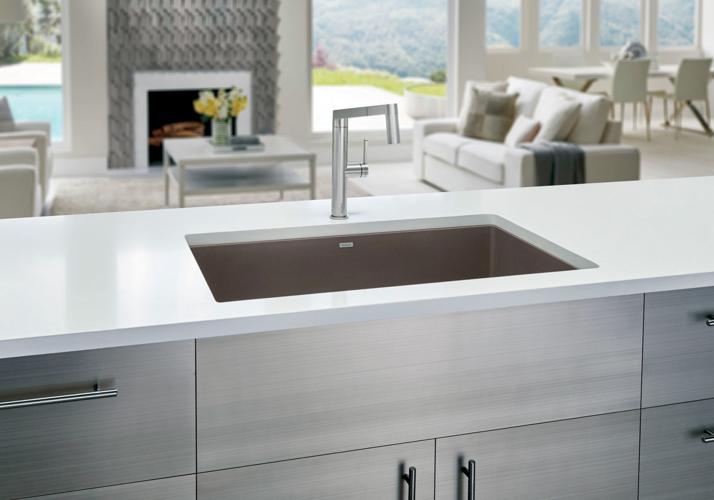
Local kitchen designers note that a sink’s durability is also an important selling point. Kitchen sinks are typically made from stainless steel, enamel-coated cast iron or composites, which mix about 80 percent pulverized granite with a resin filler. The latter is a very popular mid-priced option, said Pat Duggan, plumbing specialist for Artisan Kitchens and Baths in Buffalo.
People are also reading…
“Composite sinks are scratch and heat-resistant, are more durable and come in a lot of different colors,” Duggan said. “I’ve had a composite sink in my home for more than 10 years, and it still has no scratches or scruffs.”
Mark March, plumbing product manager with Visionary Kitchen and Baths, noted that composite sinks are made from liquid molds, which means consumers have more choices in the shape and size of the basins. The numerous color choices also make them popular, he said, although most of his customers choose black.
For clients who want countertops made of granite or engineered stone, a stainless-steel sink may be a good choice. Compared to other materials, stainless steel can be inexpensive, although designer brands like Kohler and Blanco can still easily cost upwards of $800. March pointed out that lower-gauge stainless steel, around 16-gauge, makes for a better-quality sink.
“Stainless steel sinks have come a really long way,” March said. “They are temperature resistant and stronger. Also, brushed stainless, with just the rim polished, is a nice choice.”
Once standard, enameled cast iron sinks are still popular and provide a timeless feel. However, Duggan cautions that enamel can chip and wear over time — not necessarily the best choice for people who are tough on sinks.
Once you know what material you’d like, choose a sink design. What makes sink shopping more fun today is new options like low-divides, cutting boards, colanders, work surfaces, drain boards and sink grid options, Duggan said. Here’s what’s trending:
Single bowl

Kitchen sink styles to know | Buffalo Magazine
Traditionally everyone had double-bowl sinks, Shults noted. “It used to be one bowl for washing and one for rinsing. Now everyone has a dishwasher, and a single bowl makes it easier to clean big pots and cookie sheets.” Available in compact sizes, they’re also a good choice for small kitchens where space is at a premium.
Farmhouse or Apron Front

Kitchen sink styles to know | Buffalo Magazine
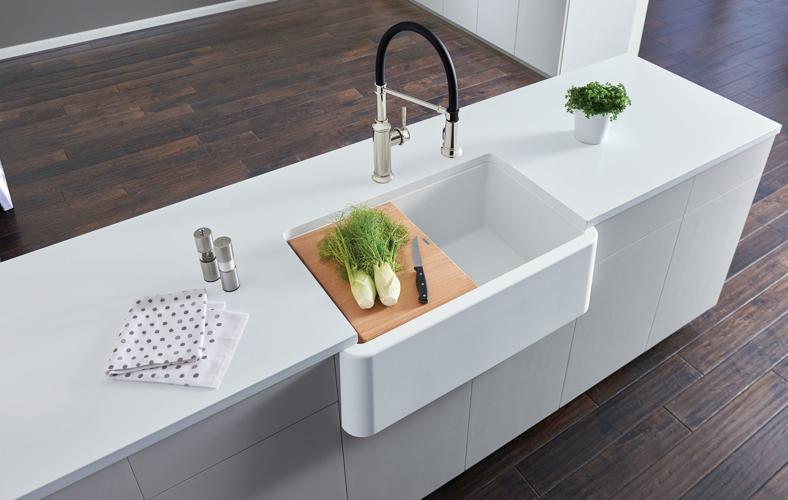
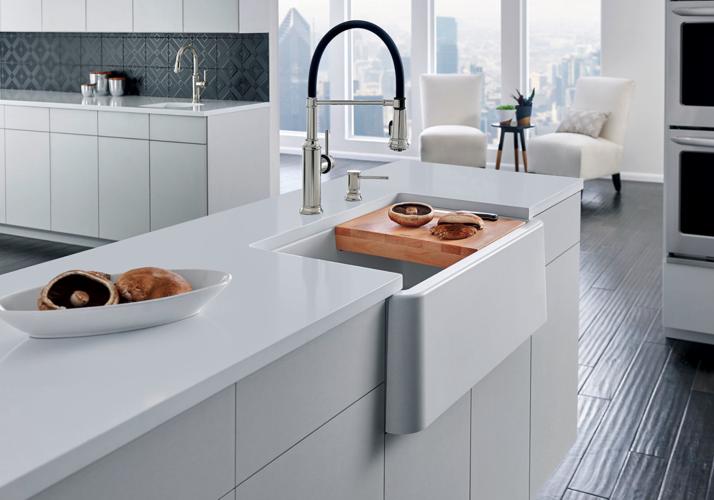
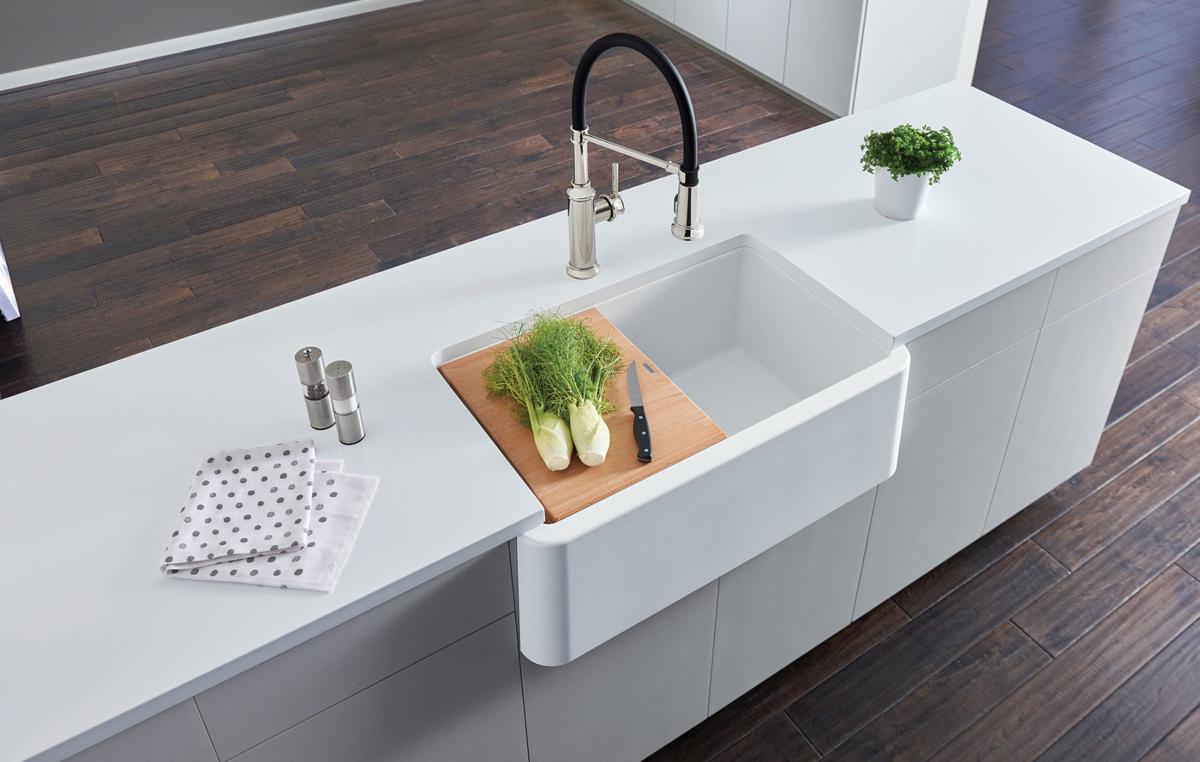
This nostalgic style features a lower edge on the front that mimics the rectangular, extra-deep look common in many vintage rural homes. It comes with one or two bowls and a variety of materials — stainless steel, composite and cast iron.
“The farmhouse sink is popular with people who are going for a more simple, original look or a Shaker style with straight lines,” said Tracy Shults, designer with Modern Kitchens.
“On the north side of Buffalo with the rebirth of neighborhoods and restoration projects everywhere, the farm sink is quite popular,” March said.
Asymmetrical
These are two-bowls sinks where one side is larger than the other: The primary sink is often accompanied by a smaller prep sink. “These are more popular than single or even double bowls,” Shults said.
Prep or Entertainment sinks
Have good space? A smaller extra sink can make a big difference in a kitchen’s workflow. These secondary sinks, often referred to as prep or entertainment sinks, offer more workspace to chop vegetables, chill drinks on ice, or wash hands while prepping a meal.
Trough
With its long, oversized proportions, the trough sink creates an open, generous look. Longer and leaner than a traditional kitchen sink, trough sinks can accommodate two, three or even four faucets, offering significant elbow room for a family of cooking enthusiasts. Due to their shape, trough sinks work well on plumbed kitchen islands. They come in stainless steel, copper or reclaimed materials. March said they’re especially popular among serious cooks.
Undermount sinks
Many of the designs mentioned can undermounted, which means the edge of the counter drops off directly into the sink basin. Unlike a top-mount sink, undermount models don’t have grooves and crevices where food can accumulate. Also, undermount sinks will be up to 1½ inches lower than a top-mounted, which means less splash and more space to stack dishes. They do require more work to install than drop-in sinks because they must be glued to the underside of the counter.