When Margie Richmond of Williamsville embarked on a renovation to her 1990s-era kitchen, she called Jennifer Hutton to recommend an interior designer.
The response from Jennifer, who redesigned Margie’s bathroom a few years ago—but had since moved to North Carolina—was, “How about me?”
Margie agreed. And although the unconventional long-distance arrangement was new ground for both homeowner and designer, they quickly worked out a process.
First, Jennifer flew to Buffalo to measure the space and review the project goals. Then she drew up some initial proposals, reviewed designs with Margie remotely and secured a trusted contractor to handle the day-to-day operations.
The goal: Transform a choppy, outdated oak kitchen into a more functional and beautiful space for preparing meals, hanging out and entertaining.
People are also reading…
Jennifer says despite the distance, the project wound up going very smoothly. It helped that she had a fairly deep understanding of Margie’s style and approach based on their previous project. Open communication and shared ideas brought the plans full circle.
The renovation unfolds

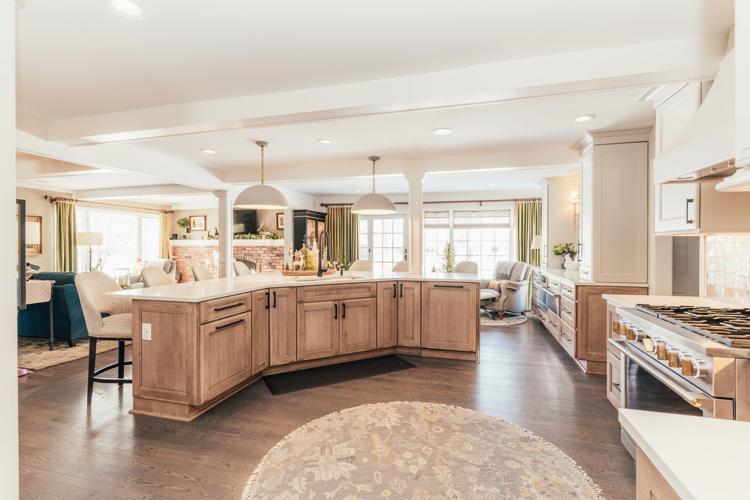
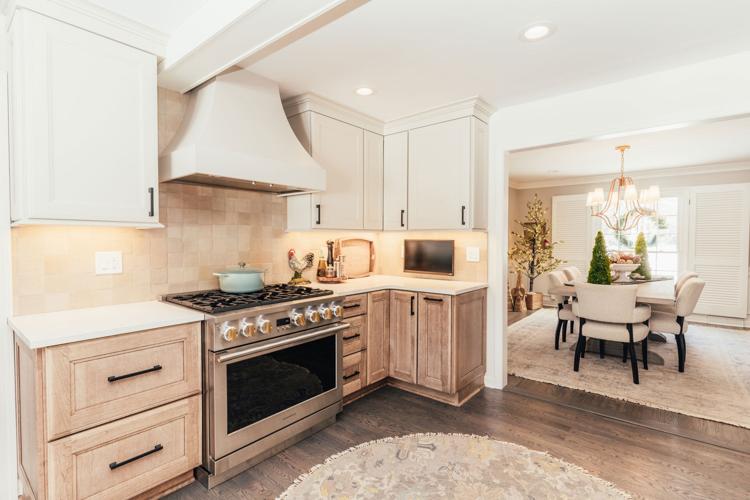
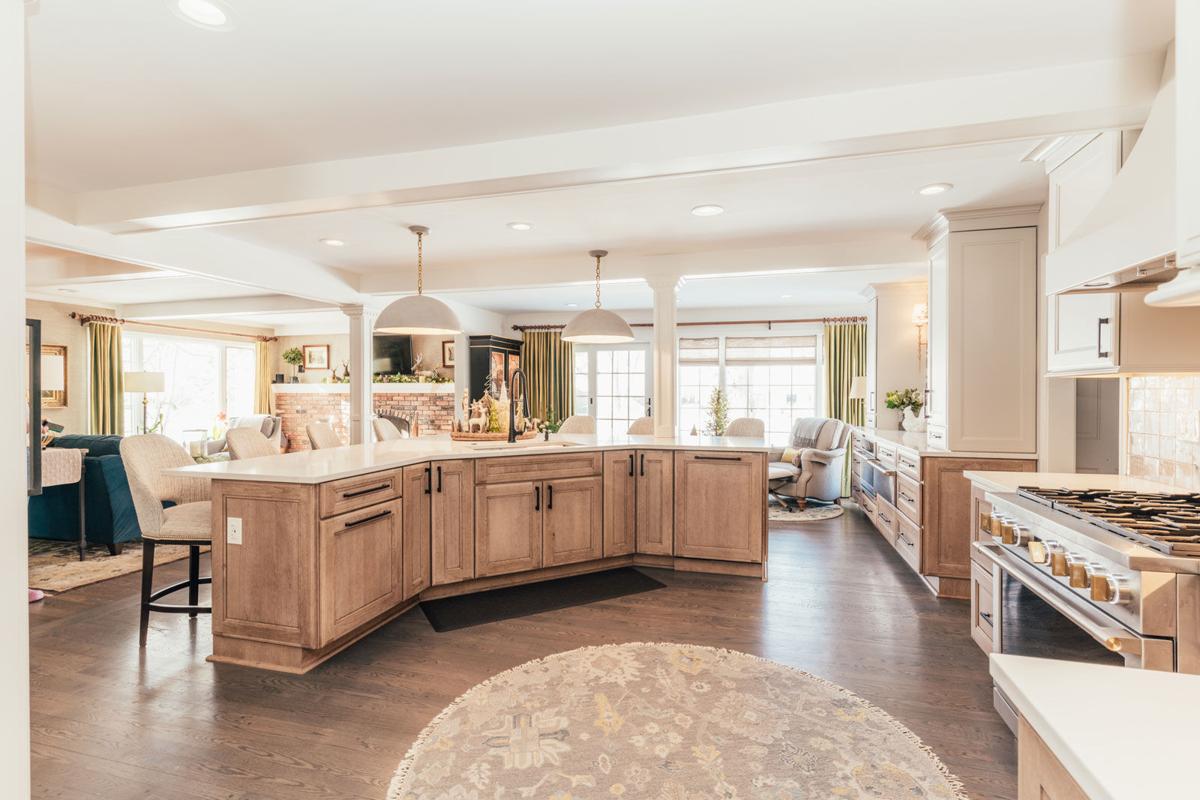
Even though all the outer walls, plumbing and electrical remained in place—keeping appliances and sinks pretty much where they were—Jennifer describes the renovation as a “complete spatial transformation.” Margie says that impact came from opening the wall between the kitchen and dining room.
“It totally changed the feel of the first floor,” she says. “By opening that wall, we emphasized the awesome flow of the house.”
The 1968 Georgian colonial, located on a tree-lined street in Chapel Woods, had good bones to begin with. Margie and her husband had purchased the home from its original owner in 1999, raising their two children there and doing some updates along the way, including a partial kitchen addition in 2006. At that time, they kept the oak cabinets.
Almost 20 years later, it was time for an upgrade. Margie’s style is best described as “traditional meets transitional,” says Jennifer, who began scouting classic pieces and finishes with a modern twist.
For cabinets, Jennifer sent Margie to Artisan Kitchens & Baths in Buffalo, who carried the same brand of cabinets as Jennifer’s supplier in North Carolina. They decided on a classic cherry base cabinet with a fresh and current cappuccino stain. For the upper cabinets, they used painted maple in a warm cream color.
Choosing the wall paint was probably Margie’s biggest challenge.
“I was driving the painter and contractor crazy,” says Margie. “They’d put new color on the walls and I’d say ‘no’ to everything. I got stuck.”
Jennifer suggested she go with a lighter color. “I never would have thought of that—I thought I needed a contrast,” says Margie. “It was like a revelation.”

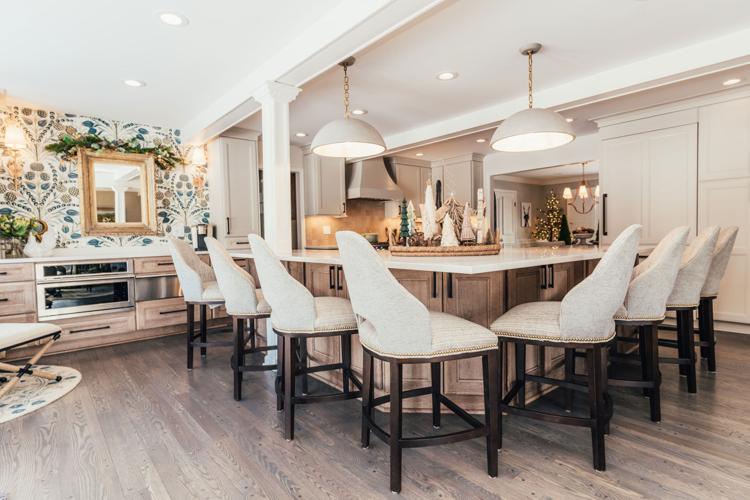
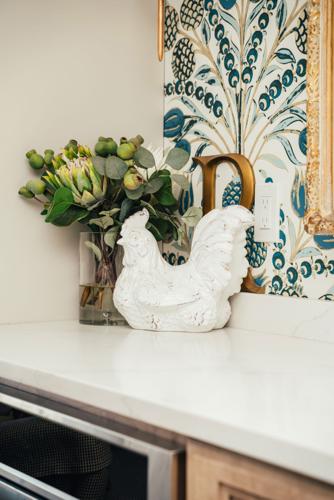
Next up was finding wallpaper for an accent wall at the serving/buffet area. It took a while, but it proved to be one of Margie’s favorite parts of the new kitchen. The blue and beige floral design popped up on Jennifer’s Instagram feed one day and she sent it to Margie, who instantly knew it was the one.
“I still stare at it every day and think about how much I love it,” she says.

Light sconces and a traditional gilded mirror finish off the accent wall, bringing all the elements together.
The other major change was transforming a two-person island into one that seats eight, providing extra storage space and expanding the kitchen’s usable work surface.
Margie went with GE Monogram Series appliances, including an extra oven to make up for losing her former double oven—much-needed when hosting 25 for Thanksgiving—and a warming drawer, which she says she couldn’t live without.
Although Margie was intentional about every design decision—and knows what she likes and wants—she said having a designer was still a must.
“When you bring in a designer, they see things you don’t,” she says. “They are trained to see it.”
As for Jennifer, she is now an evangelist for remote design.
It’s an opportunity for a homeowner to work with a designer who is the right fit, regardless of proximity, she says. She has just embarked on a new project: a full house renovation, again in Western New York.
“It’s not as far-fetched as people think,” she says. “When you have the right process in place, it makes the experience seamless.”