

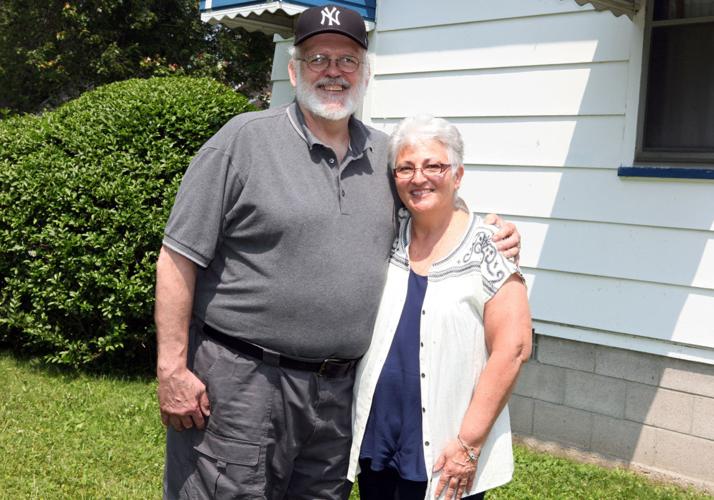
Louise Carr has lived in Western New York her entire life, but she’s rarely spent summer in Buffalo. Or in the United States, for that matter.
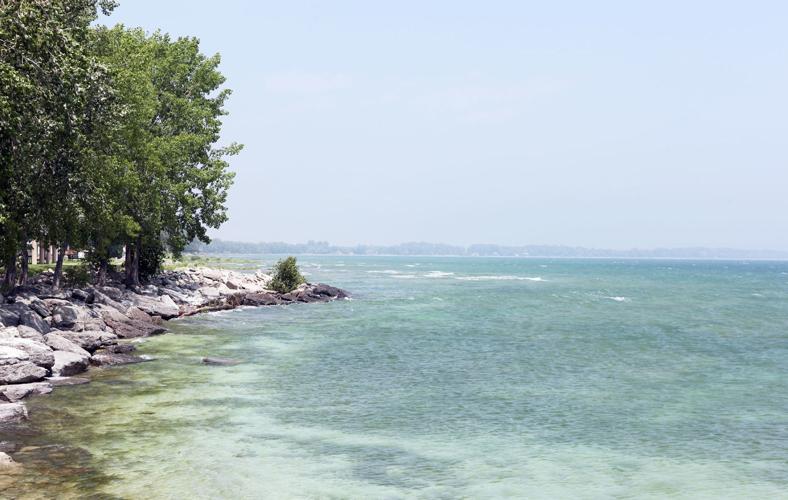
For decades, Carr, 63, has spent summer at her cottage in Canada — Crystal Beach, to be exact. It was her parents’, and now it’s hers. Carr remembers getting jolted on The Comet rollercoaster and soaring high on the Ferris wheel after spending days on Derby Road eating French fries with Loganberry-stained lips. Her cottage, a one-story summer home, is a short walk to the beach. Behind the screens of her enclosed porch, Carr has witnessed her summer community change.
Things at Crystal Beach aren’t the same as its heyday in the ’40s, ’50s and ’60s. Fort Erie's signature amusement park was closed in 1989 and replaced with a gated community of private residences. Derby Road, once swamped with people coming to the park, doesn’t draw the same crowd. It’s quieter, Carr says.
People are also reading…
And there’s been another quiet change: there are more Canadians.
For more than 100 years, Americans have dominated ownership of Canadian waterfront cottages — in communities starting near Fort Erie Beach not far from the Peace Bridge, and running roughly 11 miles to Point Abino and beyond. While Americans still own the majority of those properties, more Canadians than ever are buying homes along the Lake Erie bay communities in their home country.
Dave Klune, a real estate agent in Canada who specializes in cottage and beachfront properties in Ontario, said less than five percent of his business is coming from American buyers in recent years.
“It’s almost like the American market has dried up and gone away,” Klune said. “It’s almost nonexistent. It would be a rarity for someone to contact me from Buffalo.”
By contrast, this is an area long dominated by American owners. That history stretches back to the late 1800s and early 1900s when many successful Buffalonians, beneficiaries of Buffalo’s newfound industrial wealth, bought properties along the Canadian shoreline. The trend persisted for decades.
Now, there’s a new wave of buyers coming into the area, largely from the Toronto metropolitan area. And while other real estate professionals say they’re still fielding some American buyers, those Buffalo buyers need to have big bucks. Owning a Canadian home isn’t as easy — or cheap — as it once was. And the ever-changing relationship between the American and Canadian dollar continues to dictate the cottages’ buying and selling patterns.
But even the American property owners who’ve inherited family cottages — many passed down three or more generations — are encountering challenges. They’re facing higher taxes, a new wave of cottage owners and a changing landscape. People around Crystal Beach are seeing a buildup of new houses like never before. It may be “quieter,” but the area’s realtors say Crystal Beach is
Ontario’s next big thing, as new houses pop up across Fort Erie, especially in Ridgeway and in pockets of Crystal Beach.
Carr has noticed Americans and Canadians taking better care of their properties than in years past, and as the newcomers shuffle in, it’s a step closer to the area's vibrancy she remembers as a kid.
Canadians starting to see a ‘jewel’ of a place
Ted Banfalvi is a Canadian real estate agent who focuses on selling homes in the Crystal Beach Tennis and Yacht Club, a community of about 115 homes with an average price tag of $300,000 USD. It’s located on the grounds where the amusement park once stood.
Banfalvi estimates that around 85 percent of the community’s houses are still owned by Americans, but he, too, has noticed a shift. He’s had a home in Crystal Beach since 2002 and said the steep dip in the American dollar during the recession affected the area’s dynamic.
As some Americans question if having a beach property is worth the expense, a lot of Canadians are just now discovering Crystal Beach.
“It’s really on the cusp of an explosion both with new homes and the Canadians starting to find that jewel of a place, and realizing that the property values are so reasonable compared to what we call our ‘cottage country’ up north,” Banfalvi said. It took some time for them to warm up to the idea of owning a cottage that’s not necessarily directly on the lake, but it’s happening now. Plus, Torontonians are finding it’s easier to drive south toward Fort Erie than to drive north in the infamous snarl of Friday afternoon traffic to cottage country.
The cost of Canadian living — if you’re American
Donna Cottrell has property west of Crystal Beach in Long Beach. Like Carr, and so many others, Cottrell can’t picture a summer where her feet aren’t firmly planted in Canadian sand.
Her “cottage” — which is really a two-story, multi-bedroom house — sits right on the lake. She inherited the property from her father, who used to work at the Crystal Beach Amusement Park Fun House.
It takes Cottrell, who lives in Williamsville, a few minutes to tabulate just how much she and her husband are spending annually to keep their piece of summer paradise. She admits if you’re not going to use a summer cottage often, it’s not worth the money or the hassle.
She says she spends around $10,000 (USD) a year on taxes — she paid about a third of that when she first inherited the property about 30 years ago. Running the numbers in her head, she tacks on another $5,000 for utilities and insurance. She was also “slammed with capital gains” when her mom died, said Cottrell, 57.
She had to sell half the land her father originally purchased to cut down on taxes, and used the profit to buy out her sisters who were part owners originally, but live out of town so have no interest in the property.
Cottrell sold that land to a Canadian.
And while second-generation homeowners have their own challenges, buying a new home in Canada has even more obstacles — if you’re American.
Klune says he has a Buffalonian buyer who’s struggling to get a mortgage in Canada. It can be so tough for a foreigner that his client has decided to take residency in Canada so he can get a loan to buy a multi-family home.
Over the years, the Canadian government has tightened its lending to foreigners. An American buyer in Canada typically needs to have about 35 percent for a down payment — and sometimes as much as 45 to 60 percent, said Klune, based on their credit rating.
That translates into a $150,000 down payment on a $500,000 home when the American and Canadian dollars are on par. And that rules out a lot of American buyers who once had easier access.
Banfalvi says it’s just not as affordable as it used to be in the ’50s and ’60s for the middle class. That’s especially true for properties right on the water. Klune said, however, it is possible for families to get a nice home in the $160-190,000 range in Crystal Beach, but cheaper properties usually need more extensive renovations.
“The new Crystal Beach crowd from Buffalo and the New York area — they’re more affluent,” Banfalvi said. “Whether their families are getting together to buy a property, or they’re just more successful in Buffalo, they’re able to make the leap here in Canada now that it’s that much more expensive.”
Looking forward
Carr has a daughter who is too focused on paying off student loans to think about taking over her mother’s cottage. Carr’s hanging onto it, hoping her daughter will eventually want it.
“It will just break my heart if I have to sell it,” she said. She’s poured years of renovations into it. She met her husband at Crystal Beach — just like her mother did.
So much of the Canadian beach community is built on tradition, but will the next generation carry it on?
Klune says by the time a property gets down to the third or fourth generation, there’s not a lot of interest in holding onto it. Often the amount of money and time that needs to be invested into renovations is just too much for younger family members to take on. Some are also frustrated with how long it can take to cross the border.
Klune isn’t sure about the future of the American buyer, but he’s curious.
He thinks — as history has shown — it could depend on the exchange rate.
Back in 2002, it took only 62 American cents to buy a Canadian dollar. Just five years later, in 2007, those dollar values flip-flopped: the American dollar had plummeted, and it took $1.10 USD to buy $1 CAD. That five-year span marks the highest and lowest points for American/Canadian exchange since 1950.
But over the past year the American dollar has become strong again. As of July 1, you could buy a Canadian dollar for $.79 American.
That’s what makes Klune wonder.
“It remains to be seen if the American buyers will start coming back,” Klune said. “I think the Americans are starting to look across the river now and saying, ‘Hey, maybe we should go back to Canada because it won’t cost us an arm and a leg.’”