Teens gathered around the 1.5-ton remotely operated vehicle sitting in a loading bay in East Aurora, ready for a future in deep sea science. As Pelagic Research Services CEO Ed Cassano explained the machine’s capabilities, a titanium arm reached out and grabbed a foam ring.
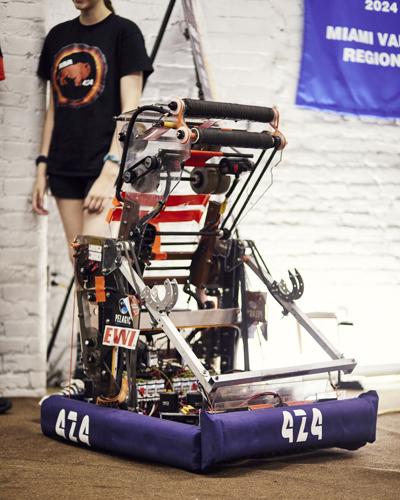
The young visitors were impressed to see the robot in action, but not shocked—after all, they had plenty of robotics experience. They had planned their own robot in a workspace on Best Street in Buffalo, then created parts, installed motors, programmed controls and named it Eclipse.
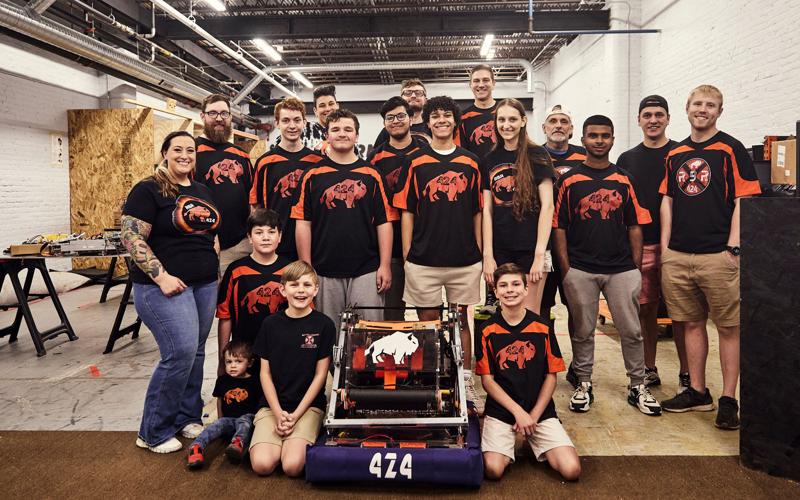
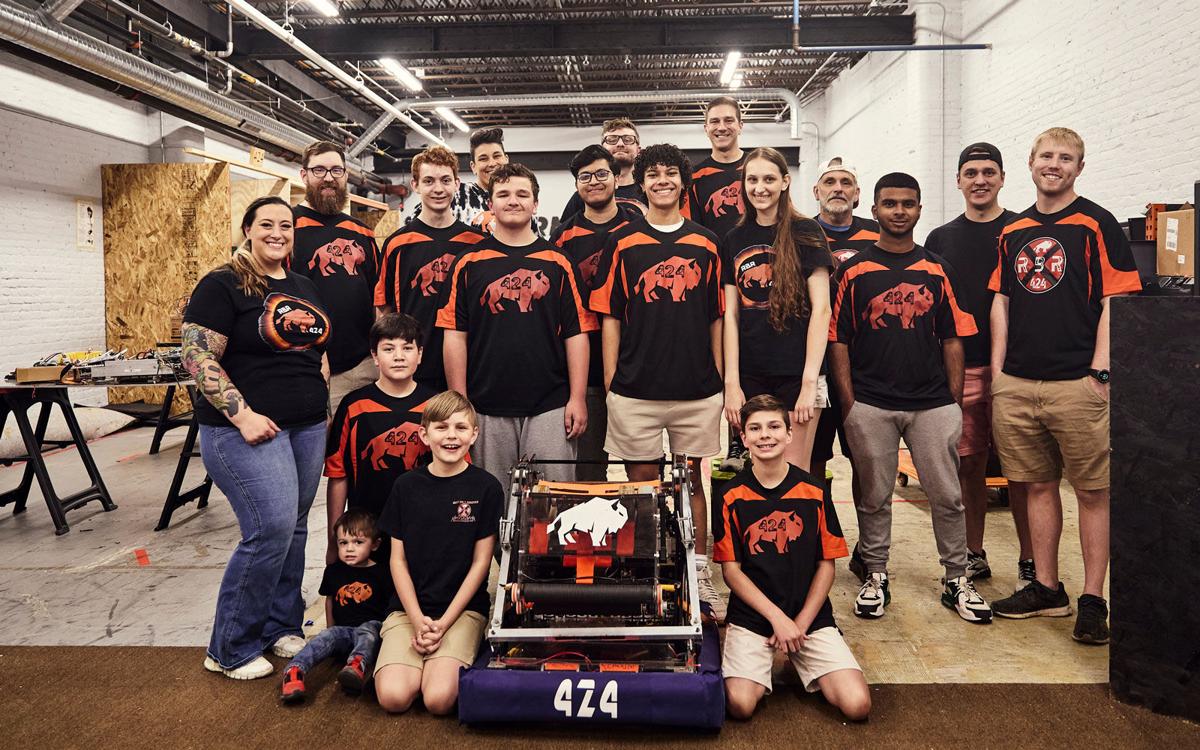
FIRST Robotics Team 424 constructed Eclipse as part of Rust Belt Robotics, a community organization that provides mentoring in science, technology, engineering and math (STEM) by way of hands-on, competitive robotics. Members also develop skills in project management, teamwork and communication—all free of charge.
People are also reading…
Lead mentor Dillan Sayers is a mechanical engineer and credits his passion to his own experiences on a robotics team. He coached a private school team for several years but wanted to bring the same opportunities to students from diverse backgrounds.

Rustbelt Robotics teammates have come from more than 20 schools all over Western New York.
“The reason I started Rust Belt Robotics was to make it accessible for any kid to join,” he says. “I wanted to make the experience possible for students who couldn’t afford private school—or any kid, really.”
Participants have come from more than 20 area schools—from Burgard and Frederick Law Olmsted to Our Lady of Victory and Western New York Maritime. Some traveled from as far as Warsaw, an hour east.
Dillan founded the group in 2022, and his partner Steph Smith is the operations manager, raising funds for the team and reaching out to the community. Several additional mentors, many with professional STEM experience, also guide the students.
“We all volunteer,” Steph explains. “We hone in on a skill and teach the kids as much as we can.”
FIRST (For Inspiration and Recognition of Science and Technology) is the international nonprofit organization that sets criteria for the robots and competitions. For its spring 2024 competition, teams needed to build robots able to drive around a playing field, collect foam rings and launch those rings to score.
“I learned how a lot of machines work by putting together parts on the robot,” says Ania, age 11. “I learned how to wire and do CAD" (computer aided design).
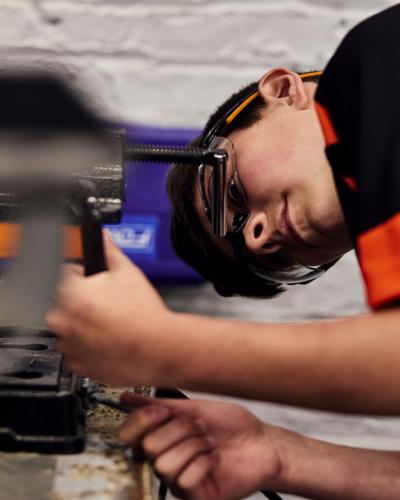
“We go through the measurements and fabricate parts in-house,” adds Otto, a high school senior. “Then we put it together and there’s all the troubleshooting.”
For Otto, the challenges are part of the fun. “I love engineering,” he says, and plans to study it in college.

Community mentors volunteered their STEM expertise to help troubleshoot and guide the team as it constructed this year's robot, Eclipse.
Team 424’s success in regional competitions created its own challenge. They qualified for the FIRST international championship in April and needed to raise money quickly for the trip to Austin, Texas. Steph set up a GoFundMe page, posted on social media and contacted to potential sponsors, and Pelagic Research Services joined other donors to make the trip possible.
Back at Pelagic’s headquarters in May, the students visited a mobile control room and examined devices built to explore the ocean floor. CEO Ed Cassano noted that with the skills they’ve learned, Team 424 members may be running the next generation of exploration robots.