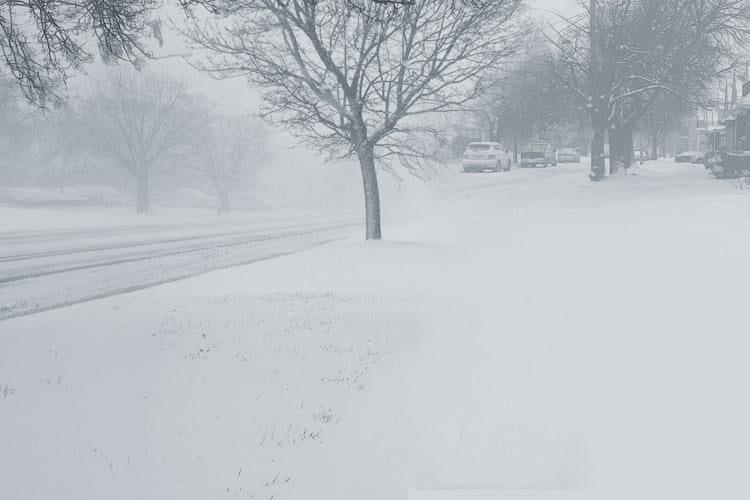
The wind outside my new Buffalo apartment didn’t just whip; it sighed, it smirked, it threw its head back and laughed, shaking the windows like a tachycardic pulse. The sky was a sheet of wet sidewalk, and I was alone.
I had spent my life—and so had my husband, the past decade—in New York City, a place that had eventually become a beautiful puzzle we could no longer solve. We weren’t the only ones. By the time we started packing, the city was in the throes of a historic transformation. Zohran Mamdani would go on to secure a stunning mayoral victory on a platform of radical affordability, promising a “mandate for change” for a city under major pressure. But for many of us, the relief felt like it might arrive a decade too late.
Staring down the barrel of the N train on another freezing, oppressively sunny morning on the elevated subway platform, I began to see, as author Thomas Hardy put it, “numbers of to-morrows just all in a line, the first of ‘em biggest and clearest, the others getting smaller and smaller as they stand farther away; but they all seem very fierce and cruel and as if they said ‘I’m coming! Beware o’ me!’”
People are also reading…
We set our sights on comfort, on the charming creak of Art Deco architecture and Hallmark-ian Christmas tree farms. We looked toward my husband’s hometown. But the logistics of our exit were jagged. I received a job offer in Buffalo months before our Queens lease ended. Logic dictated a temporary separation: he would stay behind in a shifting NYC to pack our past; I would journey north alone.
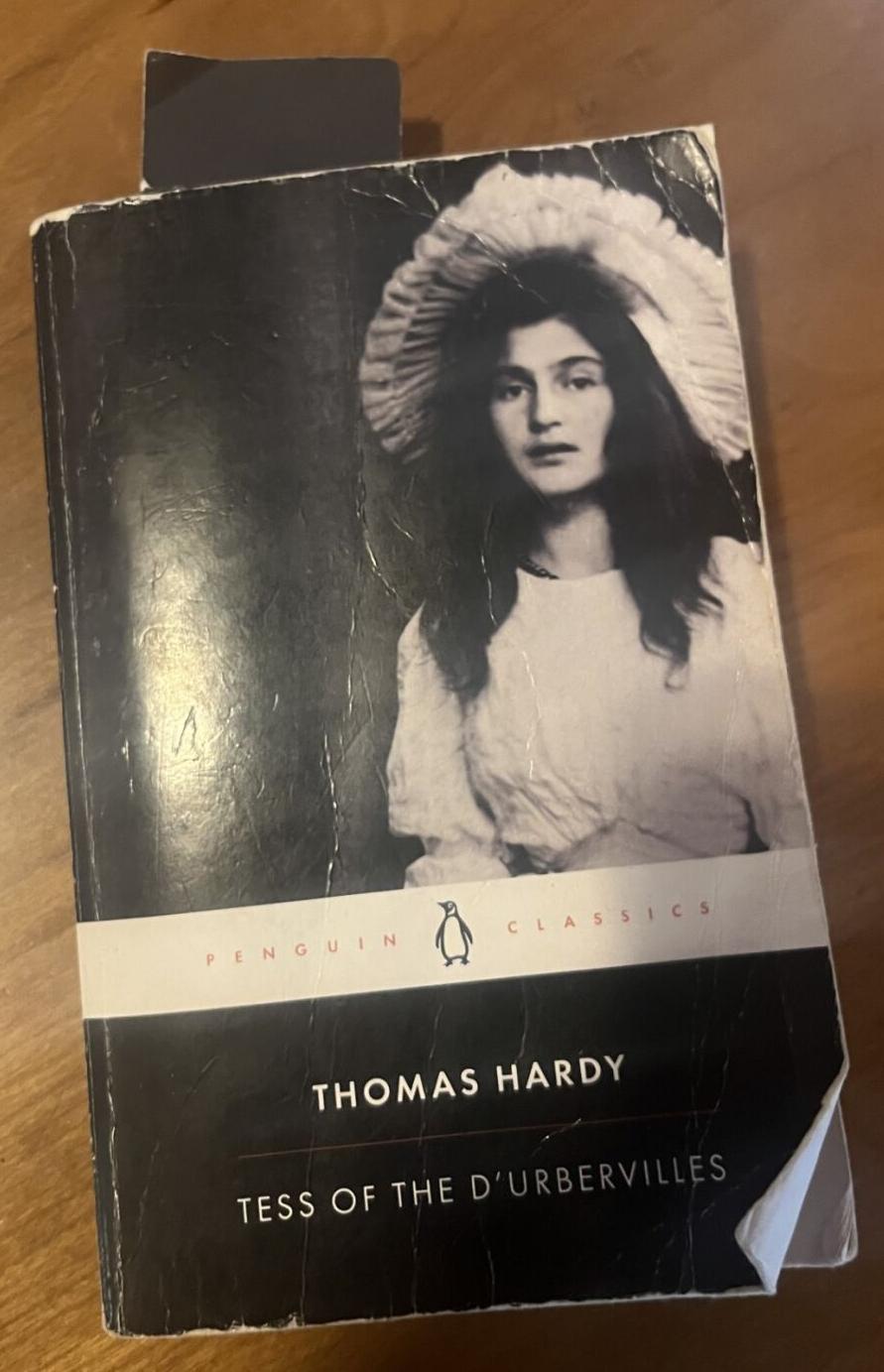
Suddenly, I was a stranger in my husband’s city without my husband. I was the “trailing spouse” who had, through a quirk of timing, arrived first. In the echoing silence of an unfurnished living room, the legendary Lake Erie winter looming like a shroud, I cracked open a book I hadn’t touched since college: “Tess of the d’Urbervilles,” by the previously quoted Hardy.
It was an unlikely choice for a girl seeking cheer. Hardy’s Wessex is a landscape of mournful gloom and inescapable fate. But I found myself having a riotous happy hour with Tess Durbeyfield, a woman displaced by economic necessity, her life’s trajectory dictated not only by men’s whims, but the darn busywork they kept piling on her.
In those first weeks, I felt a kinship with Tess’s “shining passivity.” This city lived in my husband’s muscle memory, not mine. I walked around Allentown, wondering if The Pink was a real place he had mentioned or just a surreal dream. I felt like an auxiliary character waiting for the protagonist to arrive so the plot could begin.
But as the swirling Buffalo snowflakes hardened into a biting freeze—what Hardy called the “starve-acre” season—I decided to rewrite the trajectory. In the novel, Tess is a victim of her era’s rigid fatalism, pinballed from the dreamy Vale of Blakemore to the industrial uplands of Flintcomb Ash, always enduring, never choosing.
Watching the snow bury the cars outside, I realized that my displacement wasn’t an exile; it was a blank slate. Hardy’s Victorian fatalism suggests that we are puppeteered by our environment. But Buffalo, I was learning, demands a specific kind of active resilience. You cannot be passive in a Buffalo winter; if you don’t shovel the walk, you’re trapped. I stopped waiting for my husband to be my map. Up here, with its ceaselessly unrolling sheets of fresh snow, you have to draw a map in your own image.

The author and her husband at Sports City Pizza Pub on Niagara Street.
I learned the precise, erratic timing of the NFTA buses. I found a coffee shop that smelled like home, where the barista didn’t know my husband but knew my order. I navigated the meditative labyrinth of Wegmans and the behemoth Walmart in Hamburg. Each errand was an exercise in grace, of finding beauty in the unremarkable.
By the time my husband arrived with the U-Haul, I was the one who felt like a local. I knew which floorboard creaked and how to coax the dishwasher out of its stubborn, mid-cycle sighs. I had survived my “winter of Tess” and emerged not as a tragic figure of displacement, but as the architect of our new reality.
As we move into March and April, the Buffalo landscape undergoes its annual, miraculous thaw—though it might just be winter in a different shade of mud, there is a profound, shared hopefulness in holding out for spring.
The thousands of us migrating from coastal cities are often framed as refugees of an affordability crisis—people who left the lives we knew because the math no longer added up. But I’m no longer a stranger in my husband’s city. Like Tess at Stonehenge, I’ve made my peace with its jagged power.
About the Author: Alexandra Kessler is a writer whose short stories have appeared in venues such as Joyland, Maudlin House and The Boiler. She is a recipient of the Lainoff Prize for Fiction and The Ross Feld Award, and was a Pushcart Prize nominee. She recently traded Queens for Buffalo, where she is at work on a novel. You can find her on Substack.