The Pythagorean theorem. The periodic table. Past participles. Presidential pardons. Important lessons to learn? Yes. But what can history tell us about current events, and how do we help young people make sense of the senseless things they’re seeing?
Those questions aren’t standard high school pop quiz material, but the answers are essential to a thriving global society.
The Academy for Human Rights was founded for students by teachers to address current events and complex issues that are not included in standard high school curriculum—but are essential to educating tomorrow’s global citizen-leaders.
“Even in the best classrooms, we have so much we have to cover in history that we only get a couple days on most topics, and zero on others,” explains Cofounder and Executive Director Andrew Beiter, who teaches eighth grade social studies at Springville Middle School.
People are also reading…
“If you talk to any history or English teacher about the hardest parts of their job, one of them is bringing material to life that’s happening in real time,” he explains. “It’s hard for them to teach it without the resources and some professional development. Teachers know how to talk about Edison and the Grapes of Wrath. It was taught by their teachers. But as a society we need to be talking about January 6, May 14, 9/11. These are things every serious teacher thinks about—things that need to be covered but aren’t part of standard curriculum.”
The idea for the Academy was borne out of real-world necessity in 2008. As history teachers taught lessons about the Holocaust with the message that education could prevent history from repeating itself, a years-long systemic genocide was underway in Sudan that would ultimately leave more than 480,000 ethnic Darfuri people dead. This came on the heels of the 1994 genocide in Rwanda in which as many as 800,000 Tutsi people were killed in less than 100 days.
“Holocaust education had evolved to be widespread by that point, and we were all saying, ‘It won’t happen again on our watch,’” says Beiter. “But the reality was that it was still happening in front of us, and students were asking what they could do about it. It had to be addressed.”
The Academy’s first five-day student symposium connected 25 high schoolers with historians, advocates, human rights experts, holocaust survivors and visitors from Sudan to understand more about modern-day genocide and work together to take action. In a pre-digital world, that action was flooding congress with emails and phone calls. Beiter says an onslaught of outcry by high school and college students globally played an important role in creating speedbumps to slow the genocide. While the learning is important, it’s the doing part that creates lasting impact.
“Knowledge without action is just Jeopardy questions,” Beiter explains.
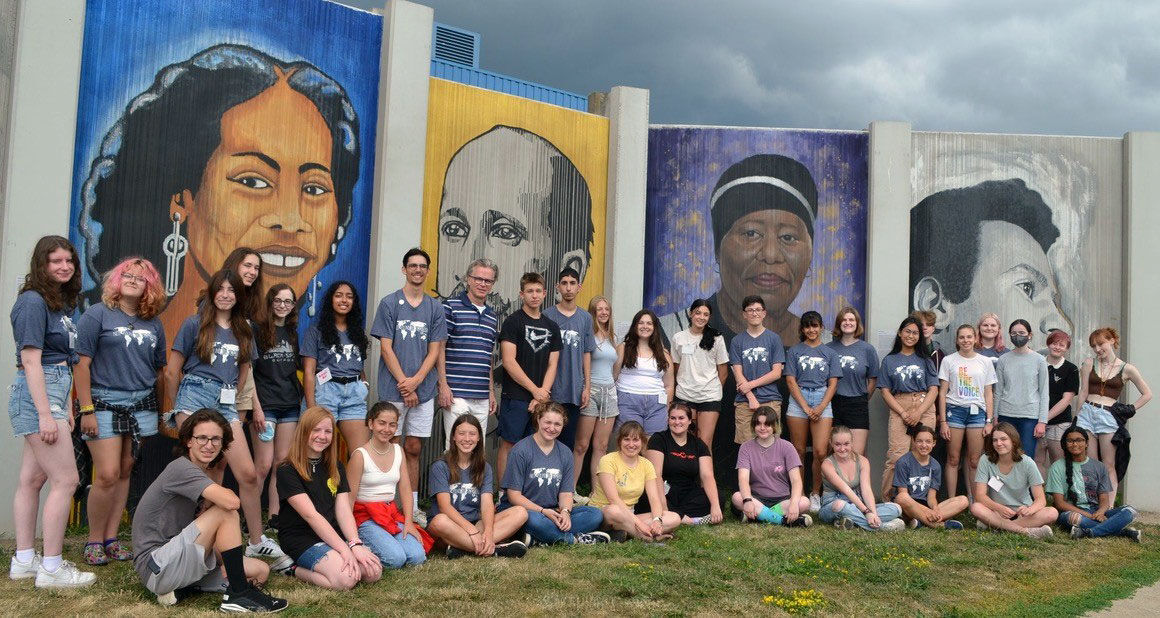
Forty students from over 15 school districts visited Buffalo’s Freedom Wall in July as part of the 2022 Youth Summer Symposium.
Since the Academy’s inaugural gathering 15 years ago, more than 800 students have tackled a lot of tough topics with the help of expert presentations, discussion panels and student-led campaigns. They’ve covered issues including the use of women as weapons of war, cultural competency, how to be an ally to underrepresented populations and the civil rights movement in Buffalo.
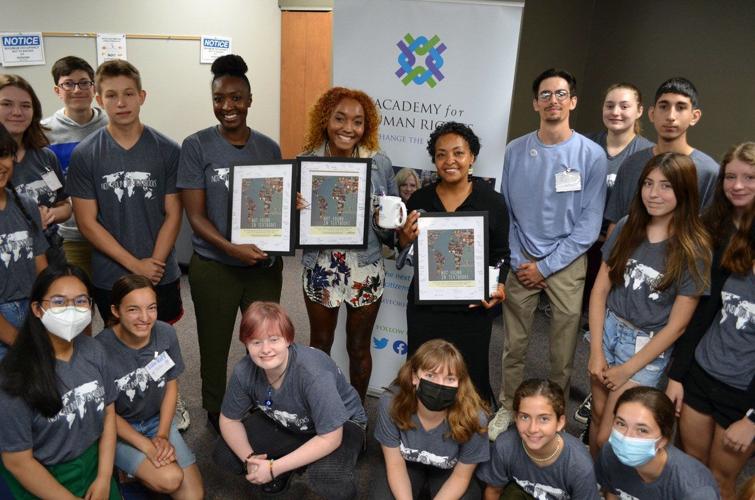
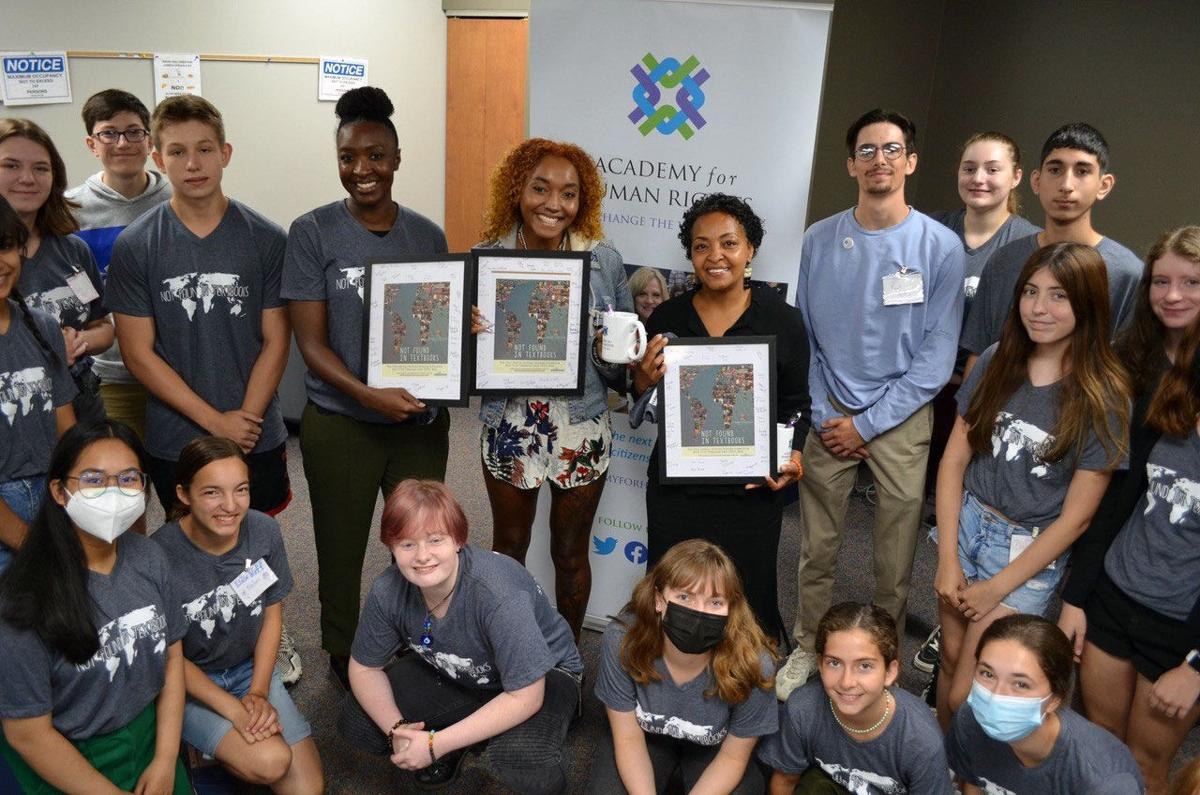
This summer, the theme “Not Found in Textbooks” included talks on historical and rising tensions in Bosnia, Native American boarding schools, sustainability in Erie County and African American women in social entrepreneurship. The mix of local and global topics was selected to inspire students to enact change at a micro and macro level. That’s exactly the impact the Academy has had on Hannah Gabelnick.
Gabelnick, who graduated from Amherst High School this year, has attended every student symposium hosted by the Academy in-person or virtually since the summer before ninth grade.
“It’s an environment of people who care about the world and others deeply and recognize that there are problems that as citizens we can try to fix,” she explains. “I knew I wanted to do it every summer. It’s so powerful.”
Gabelnick’s experiences at the Academy were a catalyst in connecting her with causes she felt passionate about. She joined the Buffalo Jewish Community Relations Council, cofounded a mental health awareness committee at her high school and now serves as an intern at the Academy for Human Rights, where she helps facilitate student discussion groups following speaker presentations. She’ll attend Princeton as a freshman in the fall, where she plans to study public and international relations and join the university’s voting advocacy club.
Beiter points out that when a student is exposed to in-depth critical thinking, it changes the letter of their life and has powerful implications on their future. But when a teacher has access to those tools and tactics, they’re able to share that knowledge and impact thousands of students. In 2015 the Academy expanded to include educator training to help teachers tackle tough topics rooted in human rights, starting with students’ media literacy in the classroom.
As information has become just a swipe or click away on omnipresent devices—especially during pandemic shut-ins—teachers’ roles shifted from presenting information to providing context around information students found on their own.
“The teacher’s role has gone from being center of the stage to the guide on the side,” says Beiter. “They don’t have to simply focus on facts from Plato to NATO but can use history as a lens to help students look into what it all means.”
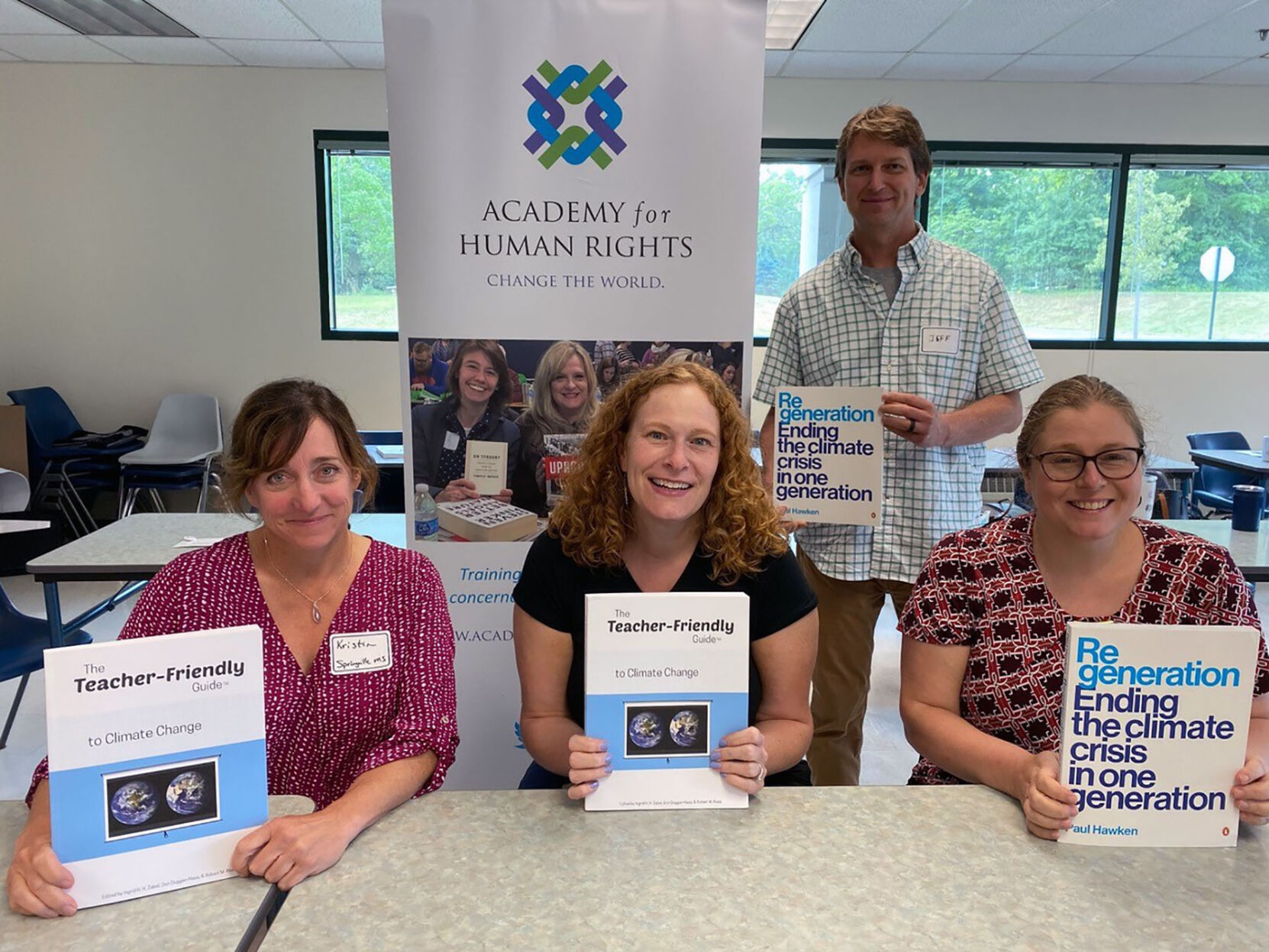
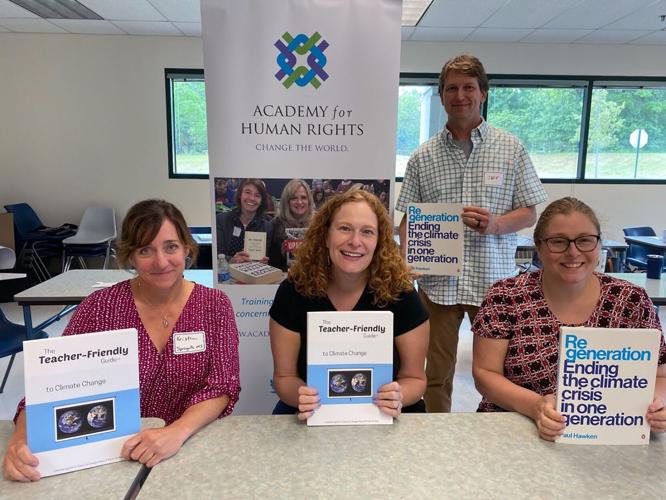
The Academy hosted a Summer Climate Conference for Educators: Understanding Sustainability this summer at Daemen University.
Since then, educator conferences, workshops and webinars have shared discussion guides and resources to support teachers in weaving a variety of important topics into English, history, science and journalism classes. They’ve covered the war in Syria, tensions in North Korea and the withdrawal of U.S. troops from Afghanistan.
When the war in Ukraine began earlier this year, the Academy held a special webinar to help teachers talk about it in the classroom. A special webinar followed the May 14 racially motivated mass shooting at the Tops on Jefferson Avenue. They’ve also covered broader issues like immigration, civil rights, climate change and media literacy in the age of social media, the topic of this fall’s educator symposium.
Jeff Schober, an English and journalism teacher at Frontier High School, found the Ukraine webinar especially helpful in his classroom.
“In late February when the war started, it wasn’t built into our English curriculum,” Schober explains. “But for older kids, they see what’s happening, they see gas prices going up as a result of what’s going on in the world. One of the things the Academy did in the spring was bring in experts, including someone living in Ukraine, to talk through what was going on. They curated a library of three- to four-minute videos from reputable news organizations that we could share in class, followed by questions for discussion. There were so many cool moments when we talked about it afterwards, and it was eye-opening to hear what caught students’ interest and attention. One student wanted to know more about the missile technology, others were focused on the humanitarian angle.”
Allowing students to pursue their individual interests—and empowering them with the tools they need to find accurate information, consider opposing perspectives and take action to affect change—is why Beiter finds this work so essential in shaping tomorrow’s change-makers in the variety of professions they’ll pursue. While some might choose a political profession, it’s not the Academy’s mission. Instead, rooted in human rights, students will make their mark in medicine, social services, law, education and beyond.
“We are equipping students to live contributory lives outside of a political spectrum,” says Beiter. “Not Democrat or Republican. Contributory.”